Post Your Comment

Are Leaders One Size Fits All?
Should you take charge? Should you work to build consensus? Victor Vroom argues that effective leaders are sensitive to the nuances of their organizations, cultural environments, and short- and long-term objectives
Q: Do people tend to overlook the importance of situations in understanding leadership?
I think they do. People are looking for universals. They want the one “best” leadership style. Each pundit has his or her own “10 Principles of Leadership”—truisms about leadership that are not phrased in situational terms. They’re presented as always correct. A few of us have been doing research on contingency or situational theories of leadership, which emphasize the fact that different kinds of organizations, different kinds of challenges, and different kinds of decisions require different leadership styles.
Q: How do leaders learn to function in different situations?
People naturally make some adaptations. If there is a fire, most people become more directive. It’s the same with a time-constrained business decision. But I also think that people can be taught to read more subtle situational cues. I teach them to methodically go through a set of questions to assess what sort of situation they are facing: Do you have the knowledge needed to make this decision? If not, does your team have the knowledge? Do you need the team’s commitment and support to execute the decision? Is there conflict and disagreement among the team? And so on.
Based on existing research on leadership styles, I have developed software that aims to help managers choose the leadership style with the greatest likelihood of success based on the leader’s assessment of eleven situational factors.
As part of my current research, I ask actual or aspiring leaders to read 30 leadership scenarios, each calling for a decision. The leader is asked which of a set of five decision processes, each varying in opportunities for participation of team members, he or she would use in each situation. The 30 cases constitute a method for assessing each manager’s “model” of leadership style. This is accomplished by systematically varying the situational factors in the normative model across the cases in accordance with a multi-factorial experimental design. I now have data on approximately 200,000 managers around the world. This enables me to compare an individual manager with groups ranging from Navy admirals to investment bankers to worldwide ceos, to name just a few. Each manager receives a report showing which factors influence their style, how they compare with the normative model, and how they compare with others that represent potential reference groups for them. Finally, the report concludes with a personalized set of recommendations about what they could do to increase their effectiveness as leaders.
Q: To what degree should leaders be looking to change situations, and to what degree should they be finding the best approach to a situation?
Most leaders emphasize short-range results. That may be appropriate in some situations. If you’re about to lay people off, investing in their development may not be justified. But in other cases, you might want to do the long-term work to change the situation by developing your team. I’ve been working with government and business leaders in Abu Dhabi. They want to develop an economy that isn’t dependent on oil production. They want to develop leaders who foster creativity and dynamism and have the ability to deal with rapid change. If they’re going to create an economy that’s capable of creating new products that will compete with the best in the world, they’re going to have to develop the talent in the labor force. If their priority is to change the business culture, which has been built around people taking orders from the top, they have to make long-term efforts to change the situation.
One of the stories I use to illustrate the importance of development is a sailing story. It is alleged that the moment that I step on my sailboat, I use an autocratic leadership style. I make the decisions and the members of my crew, largely family and close friends, do the work with the sheets and the halyards. With eight-foot waves coming over the bow, I wouldn’t have it any other way. It’s a great division of labor.
A few years back, my eldest son, Derek, called me from San Francisco asking if he could use the boat to explore the coast of Maine on an upcoming two-week vacation with a group of close friends. I immediately had an anxiety attack. Derek has sailed 4,000 miles on that boat, but it was always with me. All of a sudden, it hit me why I felt uncomfortable turning the boat over to him. Because of my leadership style, he had never brought the boat into a dock. He had never decided when to change sails. He had never been responsible for navigation. Being the captain had always been my job. A consequence of my autocratic approach on the boat was that he had no practice with anything other than taking orders.
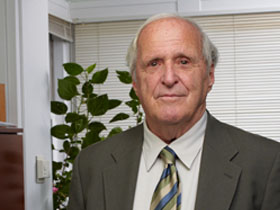
Victor H. Vroom, BearingPoint Professor of Management, Yale School of Management
A lot of leaders go about things that way, not developing the potential talents of the people they are working with. They don’t develop teams of people who can work closely together. And they don’t develop what some people call “goal alignment,” in which people are willing to sacrifice their own personal motives for the goals of the organization. That level of commitment comes when you feel as though you’ve got a voice in decision making and care not just about what you get out of it but how well the organization functions.
In some cases, the manager may not be around by the time the benefits are realized, but in my case, I hold on to sailboats and sons for a long period of time, and I could have done it a little bit differently. In fact, I turned the boat over to him, but I went along as a consultant who tried to play a not-very-obtrusive role.
Q: What have you found people generally need to work on?
Many people, particularly in highly technical fields, do not pay enough attention to the need for commitment to decisions. They overestimate their own charisma or their ability to sell their decisions to their subordinates. Quite a number of them are conflict avoiders. That is, if they see conflict, they automatically move to more autocratic solutions as opposed to, “Let’s have a meeting and talk this out and maybe we can learn from one another.” The notion that conflict and the juxtaposition of different ideas can spur creative thinking about issues is foreign to a lot of managers.
Q: Is the converse true? Do people who engage with conflict tend toward more inclusive decisions?
Yes, they are more participative when faced with conflict. And that’s appropriate, except where there is no shared goal. The combination of goal alignment and conflict is great, because most of the conflict is going to be about how to achieve an objective. The disagreement is about means, rather than ends. And those are the circumstances where conflict’s a good thing, because it leads to a deeper and deeper level of analysis of issues. That’s when you don’t want a lot of like-minded people around you.
Q: How has leadership changed in the time you’ve been gathering data?
My data goes back to 1972, and we’ve observed a fairly consistent pattern of movement toward more inclusive styles and more participative styles.
It is hard to know exactly why, but there are a number of possible factors we can identify which may contribute to finding this pattern. As the complexity of decisions increases—along with globalization and a move from a manufacturing economy to a service economy—the likelihood that a manager will have all of the data that’s needed in order to make a sound decision decreases. You need to match the complexities of the situation with complexities in the decision processes that are used to deal with these challenges.
If you think back to 1911 and Frederick Winslow Taylor’s The Principles of Scientific Management, there was one best way to do every job, and it was up to management, with the aid of the time study, to figure out what that was. It took any creativity and any discretion out of jobs. Workers should not be thinking; they should be doing what they are instructed to do. At that point, the average person in the workforce had a limited formal education. Things are different now.
There has also been a diffusion of democracy across a variety of social systems. People are not just more highly educated but want to have some influence on decisions that have effects on them. I think back to my elementary school education. It didn’t encourage individual freedom and development and expression. It was, “This is the right answer,” or “Paint a painting, but it has to be a red rose.” Education is different now. Families are different. They’ve been democratized.
Of course, this hasn’t happened to the same degree in all countries. But the U.S. is not alone in the move toward power equalization. In fact, the Scandinavian countries are far more egalitarian than we are.
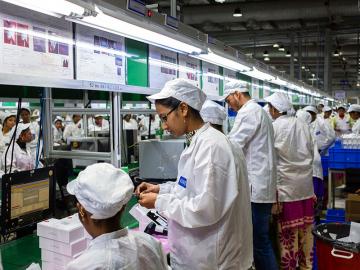
Furthermore, the organizational pyramid has changed shape. I was a consultant to ge for about 25 years. When I first started working with them, there were as many as ten levels between the bottom and the top. Jack Welch decreed that there would be no more than four or five levels. As a result, the pyramid became both flatter and fatter. Cross-functional management was pushed down to a much lower level of the organization. Spans of control increased greatly. It was once thought that a manager could not have more than seven direct reports. Now some people find themselves with as many as 40 direct reports. That has played into a team-based organizational structure.
In addition, the nature of the labor force has changed. When I first taught courses at ge, there wasn’t a female face in the class, and African Americans were few and far between. Globalization and affirmative action brought in people from many different ethnic groups and from many parts of the world. In ge and elsewhere, the net effect was a huge increase in the diversity in the labor force.
Q: How does gender play into the leadership approach?
We’ve found that women doing the same kinds of activities as men are substantially more participative. This finding is no surprise to most women in management. If you ask them why, they point to the role that women have played for thousands of years. Women have been the socio-emotional leaders of the family, the extended family, and often the community. Such a role is more associated with the participative and inclusive leadership functions.
Another reason might be the fact that autocratic females are more likely to be viewed negatively by both men and women because they’re not corresponding to the stereotype about what women ought to be. On the other hand, the autocratic male is seen as the take-charge, tough-minded, dynamic leader. The stereotype still exists.
Q: Are there mistakes that come from depending on the idea of a heroic leader?
I think so. Organizations have appointed ceos who have great brand names, who have accomplished great things but in different organizations or under different circumstances. They are brought in with the expectation that they will be equally successful, but it doesn’t always turn out to be the case. Even more important than having a brand name is knowing something about the needs and challenges of the organization and having the sensitivity to adapt their style to the new set of demands.
Q: Do effective situational leaders have less opportunity to become brands unto themselves?
I haven’t thought much about that, but it may be true. Maybe success becomes associated with the organization, not the leader. If everybody feels like they’re engaged and the organization is performing, it isn’t the leader who did it, it’s everybody.
Q: How does culture play into leadership?
Of all the factors explaining how people behave, cultural differences account for most of the variance. Geert Hofstede analyzed data that ibm collected from all of the countries in which they had operations. Contrary to ibm’s view that the Big Blue was Big Blue regardless of what part of the world it was in, he found great differences, particularly in something called power distance. This term refers to the degree to which people at lower levels expect that they should be told what to do and should not question what happened above them in organizations. It is highly related to the variance in power and wealth in a country or culture.
One of the most frequently discussed findings is that the closer to the equator, the higher the power distance. The more you move away from the equator, particularly in the Northern Hemisphere, the more egalitarian countries become. It means that in Denmark or Sweden leaders are typically inclusive and participative in their styles, whereas in Arabic countries, it’s exactly the reverse. One of the consequences of working in a global context is the need to adjust to cultural expectations and norms.
Q: Why is leadership so poorly understood?
Possibly the answer is that the underlying phenomena are very complex. What people try to do in inventing a construct called “leadership” is to figure out the characteristics of people that lead to others following them. But it turns out the answer isn’t in the personal traits of the individual. These vary depending on whether you’re talking about leadership in cartels in Mexico, political leadership, or scientific leadership. Influence is a core quality of leadership, but the process by which the influence takes place is very different. For example, leadership in science and the arts results from writing papers and books that other people read and which influence their thinking. It isn’t a directly interactive process. However, if you look at what leaders do in organizations, it is things like building consensus and motivating people to work together around shared objectives. It is a highly interactive process that doesn’t depend on a trait of the leader, but on the kinds of relationships that the leader establishes with the followers.
Q: Looking at the big picture, how much do leaders actually matter? Is an effectively organized company more important than who’s actually running it?
Many social scientists believe that individual differences among leaders don’t make much difference. Structural, economic, and other situational forces will account for much more of the variance in organizational performance. There have been regression studies that have looked at organizations over time to see how much of the variance is attributable to changes in the leadership, which is one way of getting at your question. The same thing has been done with athletic teams. If you change the coach, does it really make a difference? Not as much as people believe. If you change the conductor of a symphony orchestra, how much of a difference does it make? Not as much as people believe. We tend to overestimate the degree to which the leader is responsible for the effectiveness of the organization and ignore other factors. This has been referred to as leader attribution error. It’s not that individual leaders don’t matter, but they probably don’t matter as much as we generally think.
(Interview conducted and edited by Ted O’Callahan)
[This article has been reproduced with permission from Qn, a publication of the Yale School of Management http://qn.som.yale.edu]