<?xml version="1.0" encoding="UTF-8"?>
<rss version="2.0"
	xmlns:content="http://purl.org/rss/1.0/modules/content/"
	xmlns:wfw="http://wellformedweb.org/CommentAPI/"
	xmlns:dc="http://purl.org/dc/elements/1.1/"
	xmlns:atom="http://www.w3.org/2005/Atom"
	xmlns:sy="http://purl.org/rss/1.0/modules/syndication/"
	xmlns:slash="http://purl.org/rss/1.0/modules/slash/"
	>

<channel>
	<title>Forbes India Blog &#187; Seema Singh</title>
	<atom:link href="http://forbesindia.com/blog/author/seema-singh/feed/" rel="self" type="application/rss+xml" />
	<link>http://forbesindia.com/blog</link>
	<description>Forbes India Magazine Blog</description>
	<lastBuildDate>Sat, 25 May 2013 04:20:09 +0000</lastBuildDate>
	<language>en-US</language>
	<sy:updatePeriod>hourly</sy:updatePeriod>
	<sy:updateFrequency>1</sy:updateFrequency>
	<generator>http://wordpress.org/?v=3.5.1</generator>
		<item>
		<title>It&#8217;s not just Ranbaxy, our health care regulators have failed us too</title>
		<link>http://forbesindia.com/blog/health/its-not-just-ranbaxy-our-health-care-regulators-have-failed-us-too/</link>
		<comments>http://forbesindia.com/blog/health/its-not-just-ranbaxy-our-health-care-regulators-have-failed-us-too/#comments</comments>
		<pubDate>Thu, 23 May 2013 11:05:29 +0000</pubDate>
		<dc:creator>Seema Singh</dc:creator>
				<category><![CDATA[Health]]></category>
		<category><![CDATA[Biocon]]></category>
		<category><![CDATA[clinical trials]]></category>
		<category><![CDATA[drugs]]></category>
		<category><![CDATA[India]]></category>
		<category><![CDATA[Ranbaxy]]></category>
		<category><![CDATA[US FDA]]></category>
		<category><![CDATA[WHO]]></category>

		<guid isPermaLink="false">http://forbesindia.com/blog/?p=21577</guid>
		<description><![CDATA[The Ranbaxy saga of fraud and greed shows how our health care regulators too have failed us]]></description>
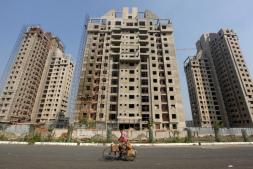
				<content:encoded><![CDATA[<div id="attachment_21611" class="wp-caption alignleft" style="width: 610px"><a href="http://forbesindia.com/blog/wp-content/uploads/2013/05/Ranbaxy6.jpg"><img class=" wp-image-21611" alt="A Ranbaxy office building is pictured in the northern Indian city of Mohali" src="http://forbesindia.com/blog/wp-content/uploads/2013/05/Ranbaxy6.jpg" width="600" height="400" /></a><p class="wp-caption-text">Ranbaxy has let down many but it’s the fellow generics makers that will bear the worst brunt (Image : Reuters)</p></div>
<p>There can be nothing more damning for a company, and more depressing for its customers, than the fact that the everyday medicines it sells could be fake, cause more harm than good, or are inert particles acting merely as placebos. The Ranbaxy saga of fraud and greed goes beyond that. In India, it shows how our regulators too have failed us.</p>
<p>As several <a href="http://articles.economictimes.indiatimes.com/2013-05-22/news/39445394_1_ranbaxy-labs-drugs-us-regulator">news reports</a> have showed, the Indian regulator too probed Ranbaxy after the US FDA’s charges came to the fore in 2008 but it was under-policed and half-baked to say the least. The investigation was dropped mid way when the Indian regulators saw that the UK and Australian regulators did not ban Ranbaxy drugs. The US media has already begun castigating the US government and the FDA for not being stringent enough. This <a href="http://features.blogs.fortune.cnn.com/2013/05/15/ranbaxy-fraud-lipitor/">story in Fortune</a> details the sordid tale and questions how “Ranbaxy is in business in the United States”.</p>
<p>Why are we not questioning Indian regulators?</p>
<p>If the national regulator for Rs 65,000 crore industry wishes to piggyback on international regulators, approve or disapprove drugs, devices and reagents on the basis of how other regulators have evaluated them, then it’s nothing short of “reverse racism”. A California- based serial entrepreneur, who has since abandoned his novel, dry reagent programme, was blatantly told that he’d get approval in India if the US FDA approved the product, even though the reagent, which did not require cold chain, was more suited to India than the United States. This story is repeated several times over in medical technology and cellular/biological products.</p>
<p>Handcuffed or emboldened, depending on which you side you are coming from, by an inept and understaffed healthcare regulator, when Indian companies go global and face international scrutiny, they react in myriad ways.</p>
<p>After the <a href="http://articles.economictimes.indiatimes.com/2012-08-10/news/33137575_1_drug-companies-jyoti-mirdha-pharma-industry">Parliamentary Standing Committee</a> report last year that brought out irregularities in this industry, virtually everything under health ministry has come to a standstill. No decisions are being taken and no approvals given for testing of any new drug or medical technology. Biocon, which signed up a new big pharma partner in BMS for its oral insulin programme in November 2012, says it is way behind its clinical trial schedule in India. Other companies are either stalling their drug discovery programme or moving it elsewhere. “Try getting anything approved in Delhi these days,” says Kiran Mazumdar-Shaw, chairman and managing director of Biocon. “The whole India pharmaceutical story is over.”</p>
<p>It’s a culmination of many things: in the last few years, no health secretary has had a term of more than a year; the health minister holds many portfolios and perhaps health is the least controversial (read political) and hence gets least attention. One industry official commented in frustration, “The health minister’s hands are full with J&amp;K issues”. The <a href="http://www.cdsco.nic.in/">Central Drugs Standard Control Organization’s</a> office itself is a case in point with temporary appointments.</p>
<p>“The industry is putting intense pressure on the government to upgrade the regulatory system but we are not happy with the outcome,” says DG Shah, secretary general of the Indian Pharmaceutical Alliance.</p>
<p>Historically speaking, there has always been a strong political opposition to implementing stringent quality norms. After all, quality comes with a price. Take for example the implementation of Schedule M, which is the minimum Good Manufacturing Practices under WHO. India took three years to implement it because it would have forced many small and medium manufacturers to close down. While Schedule M is implemented on paper, in practice, for garage manufacturers, it is business as usual.</p>
<p>Ranbaxy has let down many but it’s the fellow generics makers that will bear the worst brunt. It’s true the FDA has been tightening screws on GMP since 2002 when the US Senators pressured it for greater scrutiny. Several branded drug companies have since been in the firing line – Boehringer Ingelheim and Hospira in 2013; J&amp;J in 2011; Baxter in 2006; GSK in 2005; Schering-Plough in 2002. Still, competitors of Indian generics companies will use the Ranbaxy example to raise hackles.</p>
<p>There will certainly be some collateral damage to Indian generics interest in Japan, says Shah. But since Japan, the last regulated market to have woken up to generics, is officially promoting generics through several ad campaigns, in the near term it will heighten the scrutiny levels for Indian companies. Each generics maker will have to pass the acid test.</p>
<p>Secondly, the handful of smaller companies India which are ready, even desperate some would say, for acquisition will face the heat of the Ranbaxy case. The valuations will fall significantly.</p>
<p>In such times, if the Indian regulator rose to the occasion, these travails would become bearable. But that’s not what the politicians want.</p>
]]></content:encoded>
			<wfw:commentRss>http://forbesindia.com/blog/health/its-not-just-ranbaxy-our-health-care-regulators-have-failed-us-too/feed/</wfw:commentRss>
		<slash:comments>1</slash:comments>
		</item>
		<item>
		<title>At $1, this Diarrhoea Vaccine Paves Way for Social Innovation</title>
		<link>http://forbesindia.com/blog/health/at-1-this-diarrhoea-vaccine-paves-way-for-social-innovation/</link>
		<comments>http://forbesindia.com/blog/health/at-1-this-diarrhoea-vaccine-paves-way-for-social-innovation/#comments</comments>
		<pubDate>Wed, 15 May 2013 04:33:10 +0000</pubDate>
		<dc:creator>Seema Singh</dc:creator>
				<category><![CDATA[Health]]></category>
		<category><![CDATA[Bill & Melinda Gates Foundation]]></category>
		<category><![CDATA[DBT]]></category>
		<category><![CDATA[diarrhea]]></category>
		<category><![CDATA[IMI]]></category>
		<category><![CDATA[India]]></category>
		<category><![CDATA[NIH]]></category>
		<category><![CDATA[PATH]]></category>
		<category><![CDATA[Rotavirus]]></category>
		<category><![CDATA[vaccine]]></category>

		<guid isPermaLink="false">http://forbesindia.com/blog/?p=20861</guid>
		<description><![CDATA[This vaccine provides a good opportunity for India to create its govt-backed drug development programme]]></description>
				<content:encoded><![CDATA[<p>After nearly 25 years of work involving multi-institution, multi-country collaboration, India yesterday announced its first locally developed anti-diarrhoea vaccine. Effective against a strain of Rotavirus that causes severe diarrhoea among children under five in India, this vaccine is one of the emerging examples which show how the world in general, and India in particular, needs a different model for developing new therapies. The old model &#8211; of pharma companies deciding what and when to develop new drugs – is crumbling.</p>
<p>Bharat Biotech, which owns the intellectual property in Rotavac, has been the industry partner right from the beginning. It has priced the vaccine at $1, a fraction of what the existing Rotavius vaccines in the market today cost. In India GSK and Merck (MSD) sell their brands at upwards of Rs 2000 per course.</p>
<p>But Bharat Biotech isn’t engaged in charity here. Its founder-chairman and managing director Krishna M Ella says his company would make profits even after selling the vaccine at $1. Why? Because of its business philosophy and the fact that it has not invested in basic research and clinical trials. Those investments have come from various partners. Of the nearly Rs 300 crores of investment, Bharat Biotech has put in Rs 65 crores, mostly for setting up manufacturing facilities. A lot of expertise and rest of the investment have come from the Department of Biotechnology, All India Institute of Medical Sciences, National Institute of Immunology and a bunch of other Indian centres. Among the international collaborators are the National Institutes of Health and Centres for Disease Control in the US and global charities like Bill &amp; Melinda Gates Foundation and PATH.</p>
<p>The full story of how the strain was discovered by former DBT secretary Dr MK Bhan, then a pediatrician at AIIMS; how the project evolved across countries; and what the clinical results are can be found <a href="http://www.defeatdd.org/rotavac-clinical-trial-results">here.</a> (This URL is itself a good start by DBT in communicating with one and all.)</p>
<p>It’s the first time that any government agency has funded the entire process of a drug or vaccine development — from basic research to clinical trials. Prior to this India had never done the full efficacy trial of any molecule. Unarguably, DBT would like to make a larger point with this success. “This initiative could well have failed. Unless we embark on such long routes and have the ability to stay the course, we won’t achieve such goals,” says the newly appointed secretary K Vijayraghavan.</p>
<div id="attachment_20865" class="wp-caption alignleft" style="width: 310px"><a href="http://forbesindia.com/blog/wp-content/uploads/2013/05/Pic-for-rotavirus-blog.jpg"><img class="size-medium wp-image-20865" alt="(From left) MK Bhan, K Vijayraghavan and Krishna M Ella announcing the successful trial results of Rotavac." src="http://forbesindia.com/blog/wp-content/uploads/2013/05/Pic-for-rotavirus-blog-300x185.jpg" width="300" height="185" /></a><p class="wp-caption-text">(From left) MK Bhan, K Vijayraghavan and Krishna M Ella announcing the successful trial results of Rotavac.</p></div>
<p>DBT has a raft of similar programmes in the works where it is trying out different partnerships and funding models in vaccines for malaria, HIV-AIDS, TB and Japanese Encephalitis. Bharat Biotech, on its part, is planning to go back to the government for collaboration on late stage clinical trials of Chikungunya vaccine.</p>
<p>But can the government and charities have similar collaborations for new drug development?</p>
<p>Of course, by bringing the same partnership and funding methods, says Vijayraghavan. The challenge though lies in IP sharing. “Bharat Biotech has been exceptional. They&#8217;ve chosen this model…other companies need to be persuaded to think about affordable care,” he says.</p>
<p>Krishna  Ella believes this can be replicated in drug discovery, “as long as companies are truthful in partnership. “Many times the industry looks to the public sector [only to get]  money,” he says.</p>
<p>Government agencies, be it DBT or other funding agencies like the Indian Council of Medical Research, would have to take calls on which molecules to back, therapeutics where they get maximum bang for their buck. The Rotavac trials (excluding salaries) cost nearly Rs 100 crore.</p>
<p>Bharat Biotech plans to sell this vaccine in other parts of the world once it is approved in India. It will submit its dossier to the Indian regulator, Drug Controller General of India, in July. Rotavirus kills at least 100,000 children every year, being the third largest infant killer in India.</p>
<p>Amidst this celebration, the larger question that Indian research centres and funding agencies should be asking is how do we use this experience and success to create a mechanism to address India’s public health deficits? Perhaps create a funding corpus and an executive body to coordinate and sponsor a handful of drug development programs. Other countries are doing the same. <a href="http://www.imi.europa.eu/content/mission">Innovative Medicines Initiative</a> of Europe acts a neutral third party building bridges between universities and industry. It has created a <a href="http://www.leeds.ac.uk/news/article/3366/leeds_joins_partners_in_170m_european_drug_development_project">platform for drug discovery</a> called the European Lead Factory.</p>
<p>In the US, the new <a href="http://www.ncats.nih.gov/policy/issues.html">National Centre for Advancing Translational Sciences</a> is trying to do something similar so that it advances its own research to an extent that the industry finds lucrative enough to lap it up.</p>
<p>The global drug productivity crisis – from a peak of 50-60 new molecules/year in mid 1990s to about 20 molecules today —presents an opportunity, particularly to universities. They can train a new cadre of researchers who straddle both academia and industry.</p>
<p>Rotavac also provides a good model for new entrepreneurs, says Ella, for this is “a sector where nothing happens in less than 10 years.” Though he promises that the next vaccine won’t take 10 years.</p>
<p>&nbsp;</p>
]]></content:encoded>
			<wfw:commentRss>http://forbesindia.com/blog/health/at-1-this-diarrhoea-vaccine-paves-way-for-social-innovation/feed/</wfw:commentRss>
		<slash:comments>7</slash:comments>
		</item>
		<item>
		<title>Bird flu: How myopic govt burnt bridges with vaccine makers</title>
		<link>http://forbesindia.com/blog/health/bird-flu-how-myopic-govt-burnt-bridges-with-vaccine-makers/</link>
		<comments>http://forbesindia.com/blog/health/bird-flu-how-myopic-govt-burnt-bridges-with-vaccine-makers/#comments</comments>
		<pubDate>Fri, 19 Apr 2013 09:15:14 +0000</pubDate>
		<dc:creator>Seema Singh</dc:creator>
				<category><![CDATA[Health]]></category>
		<category><![CDATA[Bharat Biotech]]></category>
		<category><![CDATA[Bird flu]]></category>
		<category><![CDATA[China]]></category>
		<category><![CDATA[India]]></category>
		<category><![CDATA[Novartis]]></category>
		<category><![CDATA[Panacea Biotec]]></category>
		<category><![CDATA[pandemic]]></category>
		<category><![CDATA[Serum Institute]]></category>
		<category><![CDATA[Tamiflu]]></category>
		<category><![CDATA[US FDA]]></category>
		<category><![CDATA[vaccine]]></category>

		<guid isPermaLink="false">http://forbesindia.com/blog/?p=20227</guid>
		<description><![CDATA[As governments prepare for a flu pandemic, Indian govt has burnt bridges with local vaccine manufacturers]]></description>
				<content:encoded><![CDATA[<p>The number of infections and deaths from bird flu in China is increasing, so is the <a href="http://news.yahoo.com/chinese-bird-flu-infects-humans-still-mystery-004118938.html">mystery</a> around its origin. Since early March when the first case was reported in Shanghai, it’s still not known where this virus resides and if it’s transmissible from human to human. Though China suspects the virus could be spreading from human since in 40 percent of the 80+ cases of infection, there was no <a href="http://abcnews.go.com/Health/bird-flu-spreads-china-unclear/story?id=18987118#.UXCs4qK1fko">poultry contact</a>.</p>
<p>For all we know, the infection will be contained within some Chinese provinces and the fear of a pandemic will fizzle out. Let’s hope for that. Still, countries have begun their preparedness, in one way or the other. On April 4, the Centers for Disease Control and Prevention in Atlanta, US, said it had begun work on a vaccine against H7N9, a new strain of virus that’s detected in humans for the first time. That’s been a standard practice in recent times when different strains of virus have been surfacing. The vaccine is readied so that in case of a large scale need, it can be scaled up and manufactured quickly.</p>
<p>Contrast that to what the Indian government has done: Burn its bridges with the local vaccine manufacturers, to the extent that Cyrus Poonawalla, chairman of the Poonawalla group which includes Serum Institute, one of the largest pediatric vaccine manufacturers in the world, says in exasperation, “If there is a pandemic or slight epidemic, that time I will strike [the government] hard.”</p>
<p>During the swine flu pandemic of 2009-2010, the Ministry of Health and Family Welfare gave a grant of Rs 10 crore each to three vaccine manufacturers: Bharat Biotech, Serum Institute and Panacea Biotec to develop the cell-culture based technology to make vaccines. This method is different from the more commonly used egg-based technique. The decision was strategic and all three of them spent additional matching funds to build manufacturing capabilities. But before a fresh bird flu outbreak could stare at us, the manufacturers and the government are locked in a court case.</p>
<p>The reason is bizarre. Instead of procuring the vaccines after placing orders in 2009, Ministry of Health cancelled the order because the scare subsided. What’s more, now the government has even asked for a refund of the money at 12 percent interest.</p>
<p>Bird flu vaccines are not like children’s immunization vaccine that you can sell it to some other buyer in some other market, says Krishna M Ella, founder and managing director of Bharat Biotech in Hyderabad. They are made specifically for the government. “We have three batches lying with us which will expire in December.”</p>
<p>Governments around the world work with the industry to jointly develop capacity to fight any national emergency. Unlike pharmaceuticals, biologicals take time to manufacture and require special facilities. In fact, post 2009, the US government, which did not have cell culture based vaccine manufacturing capability, heavily funded Swiss company Novartis to build one such facility in North Carolina. The first batches of seasonal flu vaccines from that facility were approved by the US FDA in 2012.</p>
<p>How myopic can the ministry get? If they follow scientific developments, they’d know that last year, <a href="http://forbesindia.com/article/special/bird-flu-is-back-in-a-stronger-avataar/33332/1">several studies were published which showed</a> that the scare of flu pandemic is real. It’s not a question of “if” but “when”, such is the unpredictability and rate of mutation in the virus. In 2012, Indian surveillance, which, in any case, is not active but event based, noted 10-15 percent rise in bird flu and mortality, with deaths of crows in West Bengal and Jharkhand.</p>
<p>Keeping this unpredictability in mind, in 2011, China spent nearly $1.2 billion on its three companies to build their vaccine manufacturing capabilities, says Ella. “I was in the meeting where this presentation was made. It was clear China was strengthening its local industry with a long-term view,” he says.</p>
<p>Indian authorities need to take a long term strategic view as well. “We are still strategically, in the field of immunization, far behind Africa, Bangladesh, Sri Lanka and Nepal,” says Poonawalla.</p>
<p>Even though an international team has reached China, all we know is that the virus is a “re-assortant” one (combining genetic material from more than one parent) based on an haemaglutinin antigen A (H7) to <a href="http://news.nationalgeographic.com/news/2013/04/130409-influenza-h7n9-bird-flu-swine-flu-science-china/">which most humans have not been exposed</a>. So “if” it starts spreading then population immunity cannot be taken for granted. While there is no need to be hyper cautious about it unless traveling to China, it helps to bear in mind that if any influenza virus becomes readily transmissible from person to person, then it can travel halfway around the globe and start infecting people in a day.</p>
<p>One could argue a ‘poor’ country like India cannot afford to spend on preparedness when its public health system is creaking under the burden of infectious and non-communicable diseases. It can also be argued that Tamiflu, the anti-viral drug from Roche that is known be be reasonably effective against influenza, <a href="http://royalsociety.org/news/Stockpiling-flu-drugs-not-cost-effective-for-two-thirds-of-countries/">costs countries dearly</a>. (Here’s <a href="http://theconversation.com/tamiflu-is-stockpiled-globally-as-a-defence-against-pandemic-influenza-but-does-it-work-4955">a fascinating account by an academic</a> on how some of its benefits maybe exaggerated).</p>
<p>But from the national security point of view, ensuring local technological preparedness is a no-brainer. As we saw in 2009, we’ll see in future: vaccine manufacturers will first supply to their countries of origin. Does then it make sense for the government to lock horns with the manufacturers?</p>
]]></content:encoded>
			<wfw:commentRss>http://forbesindia.com/blog/health/bird-flu-how-myopic-govt-burnt-bridges-with-vaccine-makers/feed/</wfw:commentRss>
		<slash:comments>2</slash:comments>
		</item>
		<item>
		<title>The Complex Economics of Cancer Care</title>
		<link>http://forbesindia.com/blog/health/the-complex-economics-of-cancer-care/</link>
		<comments>http://forbesindia.com/blog/health/the-complex-economics-of-cancer-care/#comments</comments>
		<pubDate>Wed, 10 Apr 2013 10:29:56 +0000</pubDate>
		<dc:creator>Seema Singh</dc:creator>
				<category><![CDATA[Health]]></category>
		<category><![CDATA[Bayer]]></category>
		<category><![CDATA[cancer]]></category>
		<category><![CDATA[Glenmark]]></category>
		<category><![CDATA[Global Fund to Fight Malaria]]></category>
		<category><![CDATA[India]]></category>
		<category><![CDATA[Novartis]]></category>
		<category><![CDATA[Roche]]></category>

		<guid isPermaLink="false">http://forbesindia.com/blog/?p=19813</guid>
		<description><![CDATA[In the light of complex economics of cancer care, what we need is a Global Fund of Cancer Care]]></description>
				<content:encoded><![CDATA[<p>The last two high profile patent battles in India have incidentally been for cancer drugs –Glivec and Tarceva, developed by Novartis and Roche respectively. And the reason these two cases became landmark, discussed threadbare internationally, was because not only cancer cases are on the rise with the disease still being perceived as a death sentence, but because the economics of cancer medication is turning out to be very complex.</p>
<p>(Glenmark’s challenge of Merck’s diabetes drug Januvia had a precedent in Tarceva case. While the Delhi court rejected the injunction plea of Merck last week, the latter has once again appealed against the court decision.)</p>
<p>In a substantive paper published today in the journal <i><a href="http://connection.asco.org/Commentary/Article/ID/3492/Access-to-Cancer-Medications-in-Low-and-Middle-Income-Countries.aspx">Nature Reviews</a> Clinical Oncology</i>, a group of authors from Singapore, USA and Brazil evaluate the cost of cancer medication in low and middle income countries. The good news is that many countries are experimenting with measures that hold promise; the bad news, though, is that these experiments are just not enough. The authors propose a global fund to find cancer in the mould of the <a href="http://www.theglobalfund.org/en/">Global Fund to Fight Malaria</a>.</p>
<p>That might not be a bad idea. Here’s why:</p>
<p>Among non-communicable diseases cancer causes more than 7.1 million deaths annually, exceeding those caused by TB, HIV/AIDS and malaria combined. The global cost of cancer, excluding the direct cost of treatment was $895 billion in 2008. The economic toll of cancer was 19 percent higher than the second most common case (heart disease) and was equivalent to 1.5 percent of global Gross Domestic Product.</p>
<p>Data shows that 60 percent of new cancer cases are now being reported from low and middle income countries which contribute only about 6.2 percent of the total spend on cancer globally. Clearly, poor and emerging economies are not able to meet the needs of their cancer patients.</p>
<p>The authors have calculated the economic burden of cancer per patient including direct medical expenses, non-medical expenses and productivity losses. It turns out to be: $7.92 in South America, $4.32 in China, and $0.54 in India. Now compare these figures with those in rich countries: $183 in UK, $244 in Japan and $460 in USA.</p>
<p>When adjusted for income at current exchange rates, the money spent on cancer care is equivalent to 0.12 percent of the per capita gross national income in South America, 0.05 percent in India and 0.11 percent in China. In the UK, Japan and USA, the corresponding numbers expenses are 0.51 percent, 0.6 percent ad 1.02 percent of GNI respectively.</p>
<p>With such shoe-string budgets to work with, some countries have been forced to test new ways of making cancer drugs accessible and affordable. Generics or biosimilars is certainly one option, and one that the last bastion of patented drugs,i.e. Japan, is now falling for. Data presented at the 2013 American Society of Clinical Oncology annual meeting shows that use of generic anti-cancer drugs like Oxaliplatin and irinotecan in India, led to cost savings of $64 million and there was no decrease in clinical outcomes. Dabur Pharma’s launch in 2006 of a nanoparticle-based drug Nanoxel (a formulation of patented drug paclitaxel) is another good example of innovation. Authors estimate that Nanoxel is $400 cheaper to administer per cycle than paclitaxel.</p>
<p>China too has launched a generic lung cancer drug which is doing well in the country.</p>
<p>These are good models but unfortunately no peer reviewed paper has been published on the clinical trials of these drugs so that they stand stringent scrutiny of regulate markets. Without larger and additional studies, these drugs won’t enter developed markets, even though they are in equally big need there to reduce the overall health care costs.</p>
<p>In the recent din and bustle of Novartis and Glenmark cases, many of us may have forgotten the compulsory licensing that was issued last year to Natco Pharma to make kidney cancer drug sorefenib (brand name Nexavar) which has been originally developed by Bayer. It was argued, like today, that it’d deter big pharma from investing in India, or that it might impact the overall foreign direct investment into the country. Truth it, there’s no data to back such prognosis.</p>
<p>In oncology, a well-studied example of compulsory licensing comes from Thailand. It issued compulsory license for four cancer drugs and a budget impact study shows a saving of $140 million. Countries issuing these licenses may be under some diplomatic pressure or lobbying by industry groups but there is no evidence to show innovation or introduction of new drugs is adversely impacted. In Thailand’s case particularly, no relationship could be found between the use of the compulsory licenses and foreign direct investment inflows in the country between 2002 and 2008.</p>
<p>These are a handful of steps meant to ensure access to cancer drugs but they can at best be called patchy. There needs to be coordinated plan, both at the country and at the global level. A decade ago, the international response to HIV was remarkable. Can the world unite once again to halt the march of cancer?</p>
]]></content:encoded>
			<wfw:commentRss>http://forbesindia.com/blog/health/the-complex-economics-of-cancer-care/feed/</wfw:commentRss>
		<slash:comments>1</slash:comments>
		</item>
		<item>
		<title>Indians ahead of others in trusting heath care tech. Surprised?</title>
		<link>http://forbesindia.com/blog/technology/indians-ahead-of-others-in-trusting-heath-care-tech-surprised/</link>
		<comments>http://forbesindia.com/blog/technology/indians-ahead-of-others-in-trusting-heath-care-tech-surprised/#comments</comments>
		<pubDate>Fri, 05 Apr 2013 02:34:56 +0000</pubDate>
		<dc:creator>Seema Singh</dc:creator>
				<category><![CDATA[Health]]></category>
		<category><![CDATA[Technology]]></category>
		<category><![CDATA[Cisco]]></category>
		<category><![CDATA[data]]></category>
		<category><![CDATA[health care]]></category>
		<category><![CDATA[HIMMS]]></category>
		<category><![CDATA[India]]></category>
		<category><![CDATA[Universal Health Coverage]]></category>

		<guid isPermaLink="false">http://forbesindia.com/blog/?p=19543</guid>
		<description><![CDATA[While the West may be paranoid about privacy of personal health data, Indians seem to embracing it well]]></description>
				<content:encoded><![CDATA[<p>While the West may be paranoid about privacy of personal health data, in India, it appears, people hardly have privacy as their concern. Call it a cultural thing or an evolutionary response to the pitiable public health we have. People are not only willing to share their health records over social media but are more than happy to submit their genetic information to a doctor or health care professionals to ensure they have all information available to treat.</p>
<p>In a <a href="http://newsroom.cisco.com/press-release-content?type=webcontent&amp;articleId=1148539">10-country survey</a> of consumers’ attitudes toward technology in healthcare that Cisco released yesterday, Indians turned out to be the most advanced. Of those surveyed, 62 percent Indians showed willingness to share a range of information regarding their health as compared to 42 percent global response rate. When it comes to trust in devices, 87 percent of Indians were up for it, as compared to 70 percent globally.</p>
<p>The data gets more impressive when you look for consumer trust in the ‘cloud’: 94 percent in India said they were comfortable having their health records in the cloud (hosted by health care or other service providers), assuming adequate security, whereas only 74 percent respondents in other countries expressed confidence. Mobile health is no different: 60 percent acceptance in India versus 40 percent elsewhere.</p>
<p>Even health care decision makers in India are ahead of their counterparts in other regions, though in many cases they are behind the consumers in India. For instance, while 60 percent of the consumers surveyed said they have no issues sharing personal data if that improves the quality of future care, but only 45 percent of health care decision makers believe that such data should be shared.</p>
<p>The survey includes response from 1547 consumers and 403 health care decision makers in four age groups from 18 to 67 years. So that means about 200 people from each country were surveyed. Not a sample size that can be called truly representative of India (or any country for that matter), especially if we account for the vast population in rural areas that have hardly any access to technology.</p>
<p>Vishal Gupta, VP and General Manager, Global Health Solutions at Cisco argues that these studies give “directional shifts”. Additionally, in India, Cisco has collected data from 29,000 consultations in Karnataka and MP across seven district hospitals and 20 primary health centres in the last 18 months. That data, he says, shows people are accepting virtual diagnoses and consultations with much ease.</p>
<p>Cisco has quite a lot riding on the acceptance of virtual healthcare and customer service. It has been <a href="http://innovation.hindustantimes.com/innovative-people/thy-hand-great-doctor.php">developing technologies and solutions,</a> both high-end and low-end, for health care. But most of them remain in pilot stages. So the networking giant did this survey to show that virtual health care is no longer a myth. While the survey has brought out some interesting findings, they are hardly surprising. In a country which has glaring shortages in health care professionals – according to WHO India should have 23 health workers per 10,000 population but what we have is merely 12.9 &#8212; technology is the only means of bridging this gap.</p>
<p>But here’s the challenge: initial support or incentive for adoption of such technologies – be it electronic medical records or e-prescription or virtual diagnosis &#8212; often comes either from the government or the payers. The governments either fund it or lay standards, say, for electronic medical records (EMRs), make it mandatory. All such initiatives here seem far in the realm of just planning; rather in the 12<sup>th</sup> Plan document. If the Universal Health Coverage that the Prime Minister <a href="http://forbesindia.com/blog/economy-policy/why-we-wont-have-manmohancare-or-modicare-anytime-soon/">talked about early last year</a> had moved towards reality, which it isn’t as this <a href="http://forbesindia.com/article/universal-health-care/indias-primary-health-care-needs-quick-reform/34899/1">earlier story in Forbes India shows</a>, EMRs would be the starting point.</p>
<p>As technology providers like Cisco see it, basic health care could be delivered via kiosks like ATMs. Practically speaking, it is doable. After all, the banking and financial services sector in this country has seen tremendous growth because of such innovation. But the catch is there is no single body like, say, the RBI, SEBI, or IRDA, which transformed financial services, in health care to bring sweeping changes.</p>
<p>Rajendra Pratap Gupta, chairman of health care non-profit HIMMS APAC for India chapter, believes insurance companies will drive IT deployment in India. In three years, he says, India will see patients groups demanding such technologies, just as they influence policy and other decisions in the developed countries.</p>
<p>My hope too is the patient demand. Unless consumers start demanding it and differentiating care providers on this basis, change will be very slow to come.</p>
]]></content:encoded>
			<wfw:commentRss>http://forbesindia.com/blog/technology/indians-ahead-of-others-in-trusting-heath-care-tech-surprised/feed/</wfw:commentRss>
		<slash:comments>5</slash:comments>
		</item>
		<item>
		<title>Aakash Tablet: Good Riddance of Bad Rubbish</title>
		<link>http://forbesindia.com/blog/technology/aakash-tablet-good-riddance-to-bad-rubbish/</link>
		<comments>http://forbesindia.com/blog/technology/aakash-tablet-good-riddance-to-bad-rubbish/#comments</comments>
		<pubDate>Sat, 23 Mar 2013 05:30:05 +0000</pubDate>
		<dc:creator>Seema Singh</dc:creator>
				<category><![CDATA[Technology]]></category>
		<category><![CDATA[Aakash tablet]]></category>
		<category><![CDATA[India]]></category>
		<category><![CDATA[Kapil Sibal]]></category>
		<category><![CDATA[MHRD]]></category>
		<category><![CDATA[P Sainath]]></category>

		<guid isPermaLink="false">http://forbesindia.com/blog/?p=19037</guid>
		<description><![CDATA[Finally the MHRD is readying to consign Aakash tablet to the bin where it rightfully belongs]]></description>
				<content:encoded><![CDATA[<p>Just as <a href="http://www.penguinbooksindia.com/en/content/everybody-loves-good-drought-0"><i>Everybody Loves a Good Drought</i></a> (acclaimed book by noted journalist P Sainath), everybody loves, or at least loved until now, a low-cost computing story. That perhaps explains why the $35 Aakash tablet story was covered by the press, both local and international, the way it was.</p>
<p>Only one other device, India’s first truly low-cost computer named Simputer, created bigger media frenzy. While it deserved all the attention then, the founders still can’t fathom why or how it caught the fancy of the press, so much so that international press kept coming in droves for some years. One of the founders tells me that he intends to write a paper on this. I am sure that’ll make for a good story too!</p>
<p>As Mint reports today, the HRD ministry, whose ridiculously naive idea it was, is close to <a href="http://www.livemint.com/Politics/fmEi8gsOSFgOzSTFfLsw6J/Govt-almost-gives-up-on-Aakash-says-no-point-in-hardware-ob.html">shutting down this project</a>. Yes, merely a project is what it was, pursued by some for their grubby little self-interests. That the ministry under Pallam Raju has decided to consign it to the bin, a place where it always belonged, it will bring a closure to this murky story. At Forbes India, we gave it a decent burial nearly a year ago. The story, <a href="http://forbesindia.com/article/real-issue/what-went-wrong-with-the-aakash-tablet/33218/1">What Went Wrong with Aakash Tablet</a>, details how the idea was “stillborn” and no amount of clinical intervention could revive it.</p>
<p>One of the members of the committee that has reviewed Aakash for MHRD tells me that the committee’s verdict is: “It was a sham from the beginning and it continues to remain a sham even today despite a few IITs adding their heft to it”. The report is not yet public but it’s the end of the device’s ignominious journey. “It’s not a scam,” says this committee member. Fair enough, nowhere in my <a href="http://forbesindia.com/blog/technology/aakash-ii-at-the-un-why-didnt-we-send-tata-nano-or-mitticool-for-that-matter/">earlier writings</a> have I said so.</p>
<p>But before we close the chapter, hopefully for ever, let’s give one small credit to the architects. It at least got the market buzzing. Some new and some established hardware companies started looking at low-cost tablets for education for the first time. Even customers in the US took this device very seriously. “They thought we could supply at $35, we had to convince them it wasn’t possible. In fact, we had to undo what media and Aakash had done,” says an entrepreneur in Bangalore.</p>
<p>While we’ll wait for the committee report to become public, I don’t think it’ll say anything more than what we&#8217;ve already said on this site over the last several months.</p>
]]></content:encoded>
			<wfw:commentRss>http://forbesindia.com/blog/technology/aakash-tablet-good-riddance-to-bad-rubbish/feed/</wfw:commentRss>
		<slash:comments>10</slash:comments>
		</item>
		<item>
		<title>K Anji Reddy: &#8220;I want to build a company that&#8217;d last 500 years&#8221;</title>
		<link>http://forbesindia.com/blog/health/k-anji-reddy-i-want-to-build-a-company-thatd-last-500-years/</link>
		<comments>http://forbesindia.com/blog/health/k-anji-reddy-i-want-to-build-a-company-thatd-last-500-years/#comments</comments>
		<pubDate>Sat, 16 Mar 2013 04:15:33 +0000</pubDate>
		<dc:creator>Seema Singh</dc:creator>
				<category><![CDATA[Health]]></category>
		<category><![CDATA[Built to Last.]]></category>
		<category><![CDATA[Cipla]]></category>
		<category><![CDATA[Dr Reddy's laboratories]]></category>
		<category><![CDATA[GN Rao]]></category>
		<category><![CDATA[K Anji Reddy]]></category>
		<category><![CDATA[LVPEI]]></category>
		<category><![CDATA[Merck]]></category>
		<category><![CDATA[pharmaceutical]]></category>

		<guid isPermaLink="false">http://forbesindia.com/blog/?p=18685</guid>
		<description><![CDATA[A great admirer of the book Built to Last and 640-year-old Merck, K Anji Reddy wanted to build a company that’d last 500 years.]]></description>
				<content:encoded><![CDATA[<p>As clichéd as it may sound, passing away of K Anji Reddy marks the end of an era. Along with YK Hamied and Bhai Mohan Singh, Dr Reddy defined and built the Indian pharmaceutical industry that we know today.</p>
<div id="attachment_18687" class="wp-caption alignleft" style="width: 235px"><a href="http://forbesindia.com/blog/wp-content/uploads/2013/03/Anji-Reddy_300x400.jpg"><img class="size-medium wp-image-18687" title="FORBES GLOBAL CEO CONFERENCE SINGAPORE" src="http://forbesindia.com/blog/wp-content/uploads/2013/03/Anji-Reddy_300x400-225x300.jpg" alt="K Anji Reddy, founder of Dr Reddy's Laboratories" width="225" height="300" /></a><p class="wp-caption-text">K Anji Reddy, founder of Dr Reddy&#39;s Laboratories</p></div>
<p>“He was a rare combination of a great scientist, entrepreneur, philanthropist and a humanitarian. Passionate about science, compassionate to the core and a true practitioner of giving,” says Dr GN Rao, founder of LV Prasad Eye Institute in Hyderabad, whose own philanthropic efforts at LVP was touched and amplified by Dr Reddy’s help.</p>
<p>A first-generation entrepreneur who left a public sector job to start Dr Reddy’s Laboratories in 1984, Anji Reddy took the word “Laboratories” very seriously and pursued his passion of drug discovery till the end. He had set up a lab in his “grape-garden” and would tend to it every day. “Drug discovery is like an addiction…everyday something doesn&#8217;t happen but the day you have a dramatic result, you feel that there’s something that could change the way people live. That gives you the real kick,” he said.</p>
<p>The last I spoke to Dr Reddy was in October 2012. I was writing <a href="http://forbesindia.com/article/leaderhip-awards-2012/yk-hamied-ciplas-oneman-army/33881/1">this story</a> on Cipla’s YK Hamied and wanted his perspective since he had started his business with projects from Cipla and had shared a relationship with Hamied that lasted 35 years. Even though he wasn&#8217;t keeping too well he agreed to chat. “Talking about Hamied is like having tonic, I feel good,” he said, with a hearty laugh. In fact, there was even a tinge of regret &#8211; Hamied was older than him but in much better health. “When we recently invited Dr Hamied to inaugurate our R&amp;D Lab in Cambridge, he himself drove down from London…he is so healthy,” he said.</p>
<p>Dr Reddy had a fascination for drug discovery. In 1993, DRL became the first company to set up a dedicated R&amp;D center and he recalled how within first 2-3 years he licensed three molecules to big pharma. Several years later and even after stepping down as chairman of the company, he remained passionate. “Making one more generic drug doesn’t give me any kick,” he said.</p>
<p>Once when he was traveling to London, cine star Amitabh Bachchan was in the same flight, who incidentally had a co-passenger who snored. The next morning, Bachchan came up to him and said,  “Dr Reddy, why don’t you discover a drug for snoring.” Dr Reddy, who was moved by Bachchan’s performance as an Alzheimer’s patient in the movie <em>Black</em>, said, “I don’t have a drug for snoring but I am working on a drug for Alzheimer’s.”</p>
<p>Dr Reddy put “his personal money” behind this drug research. It was supposed to enter phase I trial two weeks later. We hope the drug trial marches ahead but even if it fails, it’d fulfill his dream of “failing gloriously”.</p>
<p>&#8220;He was indeed very passionate about drug discovery and very proud of the many projects that the company had,&#8221; says Dr Rao.  “He always told us that scientists should never have to face resource constraints. He is one of the few Indian philanthropists who supported research with his personal funds.”</p>
<p>Perhaps Dr Reddy understood that a solid R&amp;D foundation can sustain a company for several generations by continually adding new products to the pipeline. He admired the book, “Built to Last” and wanted to nurture his company just like the American family built Merck.  “I want to build a company that’d last 500 years, Merck is 640 years old,” he said. So serious was he about following Merck that when DRL struck a deal with the multinational for a monoclonal antibody, Dr Reddy hosted the head of the family of the 13<sup>th</sup> generation and got his own family to know the history of Merck’s family organization.</p>
<p>In many ways, with DRL, <a href="http://www.naandi.org/">Naandi Foundation</a> and other charitable activities, Dr Reddy has left an enduring legacy. He was anguished by the muddled regulatory and legislative environment — from clinical trials to price controls. “The industry that has brought so much recognition to the country is threatened every day…”</p>
<p>For an entrepreneur who &#8220;wanted to create a Merck in this country&#8221;, we hope the industry tribulations are just a passing phase!</p>
]]></content:encoded>
			<wfw:commentRss>http://forbesindia.com/blog/health/k-anji-reddy-i-want-to-build-a-company-thatd-last-500-years/feed/</wfw:commentRss>
		<slash:comments>12</slash:comments>
		</item>
		<item>
		<title>Why we won&#8217;t have ManmohanCare, or ModiCare, anytime soon</title>
		<link>http://forbesindia.com/blog/economy-policy/why-we-wont-have-manmohancare-or-modicare-anytime-soon/</link>
		<comments>http://forbesindia.com/blog/economy-policy/why-we-wont-have-manmohancare-or-modicare-anytime-soon/#comments</comments>
		<pubDate>Fri, 08 Mar 2013 03:11:22 +0000</pubDate>
		<dc:creator>Seema Singh</dc:creator>
				<category><![CDATA[Economy & Policy]]></category>
		<category><![CDATA[Health]]></category>
		<category><![CDATA[India]]></category>
		<category><![CDATA[Manmohan Singh]]></category>
		<category><![CDATA[Narendra Modi]]></category>
		<category><![CDATA[RSBY]]></category>
		<category><![CDATA[Thailand]]></category>
		<category><![CDATA[UN]]></category>
		<category><![CDATA[Universal Health Coverage]]></category>
		<category><![CDATA[US]]></category>
		<category><![CDATA[World Bank]]></category>

		<guid isPermaLink="false">http://forbesindia.com/blog/?p=18065</guid>
		<description><![CDATA[Health care has never been high on the politicians’ agenda in India and that  explains why in the last 66 years our healthcare system has grown like a malnourished child]]></description>
				<content:encoded><![CDATA[<p>Health care has never been high on the politicians’ agenda in India. And that truly explains why in the last 66 years our healthcare system has grown like a malnourished child, deficient on various parameters, be it delivery or quality. But around this time last year, as the ObamaCare debate raged in the US, we heard a similar promise from Prime Minister Manmohan Singh: That India will move towards Universal Health Coverage (UHC) by 2017. But as they say, a few months is a long time in politics, the PM’s promise rings hollow today.</p>
<div id="attachment_18071" class="wp-caption alignleft" style="width: 224px"><a href="http://forbesindia.com/blog/wp-content/uploads/2013/03/manmohan-singh-02.jpg"><img class="size-medium wp-image-18071" title="manmohan-singh-02" alt="Manmohan Singh" src="http://forbesindia.com/blog/wp-content/uploads/2013/03/manmohan-singh-02-214x300.jpg" width="214" height="300" /></a><p class="wp-caption-text">No chance of Manmohan Care</p></div>
<p>To get a more nuanced view on this you’ll have to read the set of healthcare stories we carry in the latest issue of <em>Forbes India</em> which hits the stands today. I provide here some teasers and highlight a few issues at play which, given the limited space in the magazine, we couldn’t accommodate.</p>
<p>The idea of UHC is not Utopian  Many countries have adopted it, South Korea and Thailand being recent success stories. At least 30 emerging economies are moving towards it. To inject more energy into this, in December the UN General Assembly adopted a resolution on universal health care and exhorted countries to hasten their transition to this goal. For India, where the government’s health spending is paltry 1.04 percent of GDP as against citizens’ out of pocket spending of 3.16 percent, UHC could address many issues of access, social equity, and economic growth. After all, as many as 39 million people fall below poverty line in India every year due to healthcare expenses.</p>
<p>But as the <a href="http://forbesindia.com/article/universal-health-care/indias-primary-health-care-needs-quick-reform/34899/1">magazine story will tell you</a>, it’s not going to be reality anytime soon. And the simple explanation is nobody thinks healthcare is critical for votes. After roti-kapda-makaan, the slogan we&#8217;ve heard for long is bijli-sadak-paani (electricity-roads-water). For that to convert into naukri-hawaa–swasthya (job-clean air-health), is no less than a mega evolutionary process. It may take decades.</p>
<p>A 2013 McKinsey report recommended health spending of 5.5 percent, whereas the High Level Expert Group, set up by the Planning Commission to draw the UHC framework recommends, 3.5 to 3.8 percent of GDP if India is to provide an essential package to all. Yes, basic healthcare to all. Because international experience shows if the wealthy/well-to-do population is included then there’s pressure on the system to perform.</p>
<p>None of that looks possible in near future. Meanwhile, here’s what is happening: insurance penetration is increasing because people are individually (or through employer) buying more health insurance and governments (both state and central) are allocating more money to sponsored insurance schemes. As one former health secretary of a northern state told us: “Just give money in their hands, let them buy what they want…” Clearly, he was equating food with healthcare. Many politicians and bureaucrats subscribe to this thinking.</p>
<p>But free market principles don’t quite apply to medicine. If anything, this industry is known to play a game of blind man’s buff. Patients are made to make critical choices without having the expertise or full information needed to evaluate things &#8211; from doctors to therapies. This was best explained back in 1963 when economist Kenneth Arrow wrote his classic paper, “<a href="http://www.ncbi.nlm.nih.gov/pmc/articles/PMC2585909/">Uncertainty and the Welfare Economics of Medical Care</a>”. He showed how medicine is the extreme example where the market fails to insure against uncertainties. Health economists since then have termed pricing of hospital services as “chaos behind a veil of secrecy.” Which is why the United States, one of the adopters of insurance-led healthcare, spends over 16 percent of its GDP on health (9-10 percent is public money), and ranks lowest among developed nations on its health system performance.</p>
<p>As the magazine story on Labour Ministry’s <a href="http://forbesindia.com/article/universal-health-care/will-rashtriya-swasthya-bima-yojana-take-us-the-us-health-care-way/34903/1">Rashtriya Swasthya Bima Yojana shows</a>, it is hailed by many as the panacea. On the face of it, this looks like a good thing. By 2015, the World Bank estimates, <a href="http://www.worldbank.org/en/news/press-release/2012/10/11/new-generation-of-health-financing-schemes-can-help-india-progress-towards-universal-health-coverage-says-new-world-bank-study">nearly 600 million Indians will have</a> some kind of health insurance. But when you look at the rising cost of health cover – Indian insurance regulator, IRDA, announced 25% increase in health insurance premium earlier this year and the cost of government-funded schemes are shooting through the roof as well—it’s not hard to imagine we could find ourselves in the unenviable position where the US is today. For an amazing insight on this, read this latest <a href="http://healthland.time.com/2013/02/20/bitter-pill-why-medical-bills-are-killing-us/">Time magazine report</a>, ‘Why Medical Bills are Killing Us’.</p>
<p>In short, if you bypass primary care (offered by public provisioning in most successful health systems across the world) and let the insurance rule the roost, you get a system that is not only expensive but also doesn&#8217;t care if you are necessarily healthy. (This Economist <a href="http://www.economist.com/news/special-report/21568065-world-getting-wider-says-charlotte-howard-what-can-be-done-about-it-big">special report shows people</a> are living longer, but are not healthier.)</p>
<p>That should worry us. Because policy makers are linking health to vote bank politics and apportioning state budgets towards government-sponsored schemes that fund secondary and tertiary care. Because people get some financial protection, both parties think the job is done. In reality, this is damaging the already creaking public health system. Andhra Pradesh, where YSR Reddy showed healthcare can help you return to power, spends over 68 percent of its state health budget on Arogysri, the tertiary care health insurance. Other states are following this; there are differences only in running them, not in the intended outcomes. An AP state official I spoke to, lamented the rising cost of the schemes and wanted the Centre to cap drug prices, but didn&#8217;t seem bothered about analyzing where the fault actually rests.</p>
<p>By the same logic, Labour Ministry’s Rashtriya Swasthya Bima Yojana (RSBY) is picking up failures of the public health system. It is treating cases of diarrhea, malaria, appendicitis and hysterectomies, which shouldn&#8217;t come to RSBY in the first place. “If, as we’re dreaming, there is free UHC at least up to secondary level then there would be no reason to have RSBY,” says Mirai Chatterjee, a member of Sonia Gandhi-led National Advisory Council and of the High Level Expert Group.</p>
<p>The moot point is how we see primary care in this country. What we have in the name of public health system is grossly inadequate; what we could have as complementary service from the private sector won’t come unless some fresh rules of the game are set. India is the world’s most fragmented and unregulated healthcare market, with no standard of care, cost or fee. (More than 80 per cent of outpatient and 60 percent of inpatient treatments take place in private sector.) A malaria treatment can range from Rs 5000 to Rs 20,000.</p>
<p>“Some basic regulation has to be in place. It’s true the Clinical Establishment Act is passed but not many states have taken it on board, including my state ofGujarat. It’s clear the lobbies are very powerful, we understand that,” says Chatterjee, who, as a NAC member, wants to go slow and build bridges with the medical lobbies.</p>
<p>Time is running out to devise a continuum of care that incorporates primary, secondary and tertiary services. “It’s not the mandate of the private sector to look at social returns, at least not at this point…it’s still fast growing industry,” says Ashwin Naik, founder-CEO of Vaatsalya Healthcare, when asked if the private sector would enter primary care. He points to the low margins in the unorganized primary care. (More on that from other industry leaders in the magazine.) Secondly, he says, we pay taxes so it’s the government’s mandate to ensure right to healthcare.</p>
<p>(Here’s an interesting example how the govt and the private sector in the US are solving this problem: <a href="http://www.nytimes.com/2012/12/16/opinion/sunday/when-the-doctor-is-not-needed.html?_r=0">When the doctor is not needed</a>.)</p>
<p>If in all these years the government didn&#8217;t care about health, it’s naiveté to think it will do so now, in times fiscal conservatism. But making regulation (not over regulation) and enforcing them doesn&#8217;t cost much, especially if it unleashes the creative energies of the industry.</p>
<p>But as one principal secretary told me, “We have a classic case [in bureaucracy] where the government runs its own business [of governance], competing with all other businesses around.”</p>
<p><strong>Disclaimer:</strong> The names in the headline, Manmohan Singh and Narendra Modi, symbolize leadership. Instead of ModiCare, we could well have SwarajCare or JaitleyCare. There’s not much in the name here. But the thing is, does anyone care?</p>
<p>&nbsp;</p>
]]></content:encoded>
			<wfw:commentRss>http://forbesindia.com/blog/economy-policy/why-we-wont-have-manmohancare-or-modicare-anytime-soon/feed/</wfw:commentRss>
		<slash:comments>5</slash:comments>
		</item>
		<item>
		<title>What if Umbrellas Could Generate Solar Power?</title>
		<link>http://forbesindia.com/blog/technology/what-if-umbrellas-could-generate-solar-power/</link>
		<comments>http://forbesindia.com/blog/technology/what-if-umbrellas-could-generate-solar-power/#comments</comments>
		<pubDate>Mon, 11 Feb 2013 03:51:56 +0000</pubDate>
		<dc:creator>Seema Singh</dc:creator>
				<category><![CDATA[Technology]]></category>
		<category><![CDATA[Bridge to India]]></category>
		<category><![CDATA[Heliatek]]></category>
		<category><![CDATA[JNCASR]]></category>
		<category><![CDATA[organic solar cells]]></category>
		<category><![CDATA[US military]]></category>

		<guid isPermaLink="false">http://forbesindia.com/blog/?p=16691</guid>
		<description><![CDATA[Organic solar cells offer a great opportunity to build inexpensive, portable and flexible solar generating devices]]></description>
				<content:encoded><![CDATA[<p>Imagine an umbrella functioning as solar concentrator, funneling the energy to its stick from where you can charge your cell phone? Or, even power a few other basic electrical devices, or run a tiny fan as the accompanying picture shows.</p>
<p>&nbsp;</p>
<div id="attachment_16693" class="wp-caption alignleft" style="width: 310px"><a href="http://forbesindia.com/blog/wp-content/uploads/2013/02/organic-solar.jpg"><img class="size-medium wp-image-16693 " title="organic solar" src="http://forbesindia.com/blog/wp-content/uploads/2013/02/organic-solar-300x200.jpg" alt="umbrella made from polymer solar cells" width="300" height="200" /></a><p class="wp-caption-text">An umbrella made from polymer solar cells, with a tiny fan attached to its stick</p></div>
<p>This may sound gimmicky but the scope that organic photovoltaic cells offer for inexpensive, portable and decentralized solar power generation is enormous. The US military has <a href="http://solarenergy-usa.com/2012/03/us-military-makes-big-solar-power-push/">already built tents that generate solar power</a> – where solar cells are integrated with the canvas &#8212; and remain as foldable and flexible as always.</p>
<p>In solar technology parlance, organic cells represent the third generation, after crystalline and thin film solar cells. While organic solar cells are inexpensive to manufacture, the issue that companies and researchers are grappling with today is the low efficiency that these cells today offer. That is, conversion of solar insolation into electricity. It is 8-10% lower than crystalline solar cells.</p>
<p>One of the reasons that hinder large scale manufacturing is the fact that power efficiency, which scales inversely with the active area size, does not make single large area cells amenable to roll-to-roll manufacturing. There are dead zones or unutilized spaces in large surfaces that make commercial manufacturing nonviable.</p>
<p>Now, KS Narayan and his team at <a href="http://www.jncasr.ac.in/">Jawaharlal Nehru Center for Advanced Scientific Research</a> in Bangalore show that they have made a dent in both these problems. They propose their new strategy and results in the <a href="http://onlinelibrary.wiley.com/doi/10.1002/adma.201204048/abstract">latest issue of Advanced Materials</a>.</p>
<p>For increasing power efficiency they use low temperature meltable alloys as cathodes which results in reduced resistive electrical loss and additional photo-generated carriers near the metal electrode. Secondly, and more interestingly, they do better light harvesting by using specific flurorescent dyes in the non-active zone of the cells.</p>
<p>Dyes are introduced in the electrode gaps which cause re-direction and re-emission of incident white light. (They absorb the blue light and remit it as red.)</p>
<p>Researchers say this active encapsulation where light wavelength is converted to a more desired wavelength for the device to be redirected effectively is a new concept in the field. Their devices showed 12 percent increase in efficiency upon inclusion of the suitable dyes. They also argue that since there’s a wide selection of dye-molecules and a reasonable large range of melt processible alloys, this fabrication technique can be used for a variety of organic cells.</p>
<p>Brian C O’Regan, who is part of the Solar Network at Imperial College London, works in the related area of dye-sensitized cells (not polymer cells) says he “really likes” Narayan’s work. “I am fairly sure the work is novel, I haven’t heard of this approach before. And it appears to solve a problem that polymer cells face in the issue of upscaling.”</p>
<p>Narayan, who has secured his intellectual property through PCT, is keen to commercialize this technology. He believes there are many small and big uses in India, from canopies in large hotels to small devices running off-grid in rural areas. “Companies which are looking for non-existing applications will find this more appealing,” he says.</p>
<p>India is a melting pot of renewable energy experiments, including  business models. Unlike Europe,Germany in particular,India isn&#8217;t subsidizing generation, nor is it subsidizing manufacturing like China. With nearly 400 million people without grid power, it’s clear that decentralized non-polluting sources of power will bring relief to millions in this country.</p>
<p>Even with the first two generations of solar technology, industrial commercial users are moving to decentralized power generation because it is more economical, says Tobias Engelmeier, managing director of Bridge to India, an environment consulting company in New Delhi. With new technology, you can expect even more decentralization. “Organic solar cells would accelerate this trend as the cost/kWh comes down further, say from Rs 7 to Rs 5,” he says. “It has almost become a question of commercialization, not one of whether it’s the best technology.”</p>
<p>There has been some fatigue with solar technology breakthroughs because of the initial hype generated, especially in the US, and VCs went along with it. But as we saw, solar made bigger advances through evolution – cost, scale, volume—rather than revolution (in technology).</p>
<p>Incidentally, the pace of R&amp;D and the subsequent breakthroughs have once again brought the shine back on solar technology. TechNavio’s analysts expect the global next-generation organic solar cell market to grow at 66.23 percent over 2012-2016. One of the key factors contributing to this market growth is the increase in attributes. Earlier this year German company Heliatek, one of the leading organic solar cell manufacturers, improved its own previous record by showing  an efficiency of 12%.</p>
<p>“It’s fantastic that an Indian lab has shown this breakthrough as India has traditionally not contributed to solar technology development,” says Engelmeier.</p>
<p>But since it’s now a question of commercialization, will Narayan find equally talented partners to take his lab prototypes to the market?</p>
<p>Rajesh Rai, chief executive of India Innovation Fund which invests in IP-driven start-ups, finds the technology interesting. “Assuming that the technology is differentiated and novel (as it seems to be) the key is how well Prof Narayan may work with a partner &#8211; a corporate partner or an individual,” he says.</p>
<p>For Narayan, who is also the dean of R&amp;D at JNCASR, it isn&#8217;t just about commercializing this particular technology. He has a full portfolio of ready-to-commercialize technologies. More importantly, he also has to set an example. “I will have to take the plunge as this [commercialization] is what we are encouraging among our students.”</p>
<p>&nbsp;</p>
]]></content:encoded>
			<wfw:commentRss>http://forbesindia.com/blog/technology/what-if-umbrellas-could-generate-solar-power/feed/</wfw:commentRss>
		<slash:comments>9</slash:comments>
		</item>
		<item>
		<title>What this 75-yr-old&#8217;s Story tells us About Discovery in India</title>
		<link>http://forbesindia.com/blog/technology/what-this-75-yr-olds-story-tells-us-about-discovery-in-india/</link>
		<comments>http://forbesindia.com/blog/technology/what-this-75-yr-olds-story-tells-us-about-discovery-in-india/#comments</comments>
		<pubDate>Tue, 29 Jan 2013 05:18:23 +0000</pubDate>
		<dc:creator>Seema Singh</dc:creator>
				<category><![CDATA[Technology]]></category>
		<category><![CDATA[AIIMS]]></category>
		<category><![CDATA[Carl Popper]]></category>
		<category><![CDATA[DRDO]]></category>
		<category><![CDATA[energy]]></category>
		<category><![CDATA[India]]></category>
		<category><![CDATA[Kalam]]></category>
		<category><![CDATA[nuclear science]]></category>
		<category><![CDATA[X-ray]]></category>

		<guid isPermaLink="false">http://forbesindia.com/blog/?p=16121</guid>
		<description><![CDATA[Not only does it require a different kind of people to go down the research path, but even requires a different sensibility to appreciate, and evaluate scientific research]]></description>
				<content:encoded><![CDATA[<p>Karl Popper, a philosopher and professor from London School of Economics once likened scientific research to a dark man, dressed in dark, who enters a dark room in search of a dark hat that may not be there. One of the greatest philosophers of science of the 20<sup>th</sup> Century, Popper, who died in 1994, captured the soul of this enterprise in this analogy. Not only does it require a different kind of people to go down this path, but even requires a different sensibility to appreciate, and evaluate, scientific research.</p>
<p>So last week when I came across two completely different stories, of two men above 70 years of age in pursuit of discovery, I was reminded of Popper and the fact that somehow in India we have a patchy record of appreciating/encouraging curiosity-driven research.</p>
<p>Dr MA Padmanabha Rao&#8217;s story is depressingly inspiring. In response to my old blog post, <a href="http://forbesindia.com/blog/economy-policy/does-indian-science-suck/">Does Indian Science Suck</a>, Rao, former deputy director of the Defence Laboratory in Jodhpur, wrote a moving account of his own career, the latter half of which has been spent in research. I reproduce that comment below but before that a little background on him.</p>
<p>After teaching nuclear medicine at AIIMS in Delhi, he joined the Defense Lab in Jodhpur in 1983. He did experimental work in nuclear physics and detected new phenomenon in light emission from X-ray sources, science that lies at the intersection of nuclear and X-ray physics and atomic spectroscopy. But before he could publish his work, he attained his retirement age. Rao was neither given an extension nor due recognition in promotion; in fact, he was denied promotion.</p>
<div id="attachment_16125" class="wp-caption alignleft" style="width: 310px"><a href="http://forbesindia.com/blog/wp-content/uploads/2013/01/atomic-phenomenon.jpg"><img class="size-medium wp-image-16125" title="atomic phenomenon" src="http://forbesindia.com/blog/wp-content/uploads/2013/01/atomic-phenomenon-300x246.jpg" alt="Atomic phenomenon" width="300" height="246" /></a><p class="wp-caption-text">Bharat Radiation: Light emitted from radio isotopes comes from a single atom</p></div>
<p>He continued interpreting the data and kept sending his work – remember, as a freelance scientist which is not a good position to be in, in the rarefied world of scientific publication &#8212; to various journals. Many rejections came; finally he published his <a href="http://www.sbfisica.org.br/bjp/files/v40_38.pdf">work in the Brazilian Journal of Physics</a>. He has termed his observation of the new light phenomenon as Bharat Radiation, but nobody in “Bharat’ seems to care for it! Care enough to repeat those experiments and validate or refute his claim. He says when he met late nuclear scientist Raja Ramanna in Bangalore, the latter first showed disbelief, and then disinterest. “I am tired and retired”, is all that Ramanna said.</p>
<p>“He has experimentally observed radiation for the first time. Why this work was not published in more reputed journals, I don’t have an answer to that,” says DC Dubey, former professor of physics at IIT Delhi who has known Rao for a long time. Prof Dubey, who is now at ITM University in Gurgaon, says he trusts Rao’s work and the claim is original, “how important it is remains to be seen.”</p>
<p>“In this country if you have a godfather, things move faster and you even achieve things which you don’t deserve. But Rao neither has a godfather, not any association,” says Prof Dubey.</p>
<p>Can any Indian institution give an honorary title of National Professor or Emeritus Scientist to Rao so that when he sends his research paper to journals for publication, he is treated with more respect? He says he has some more work in solar physics to be published. We only hope he has some institutional backing this time.</p>
<p>Here’s Rao’s story in his own words:</p>
<p><em> </em><em>How scientific discoveries are made? I saw a long debate keeping in view why India could not make any original research or scientific breakthroughs. It is not true that India failed to do any breakthroughs or discoveries in the past. In understanding a surprise finding noticed in 1988, I worked day and night for 9 yrs from 1988 until my retirement in 1997 at the Defence Laboratory (DRDO), Jodhpur, Rajasthan. I officially met Dr.A.P.J. Abdul Kalam, the then Scientific Advisor to Minister of Defence, in 1992 in his office and appraised my discovery on detection of light emission from radioisotopes. Moreover, the Director of the Laboratory has officially sent my official Technical Report released in April 1997 on my discovery of new &#8216;atomic phenomenon&#8217; in radioisotopes and XRF sources to Head of DRDO, Dr. Kalam. Instead of giving an award or a normal promotion, I was not even allowed to attend interview for my last promotion to sc F post in summer 1997, because of downgrading my confidential reports by my seniors for reasons unknown to me. Some annual and half yearly reports sent from the Laboratory to Dr. Kalam mentioned my discoveries, yet I was victimized.</em></p>
<p><em> </em><em>http://www.nature.com/news/2011/111107/full/news.2011.632.html . There is none to question Dr.Kalam, and DRDO why it happened to the discoverer of a new atomic phenomenon and none can undo the immense harm done. After retirement, I continued my fundamental physics research at my residence in New Delhi for another 13 yrs until publication of my research paper in Braz J. Phy, Mar, 2010, http://www.sbfisica.org.br/bjp/files/v40_38.pdf which claims six fundamental physics discoveries including the discovery of Bharat Radiation. Since I am an Indian and done the research in India, so the research is hardly known to most Indians for various reasons. Some top scientists pretend that they are not aware of the recent physics discoveries done in India, though most popular in Internet.</em></p>
<p><em> </em><em>On record, I am the current discoverer in India but I do not find any senior scientist from DRDO or any other organization coming forward to recommend for any award, research grant, or Emeritus Scientist. Most of my pension benefits (nearly 2 lakh Rupees ) were spent on funding my own research, attending international conferences in USA, Bulgaria and Russia to check up the opinion of foreign scientists whether these are really discoveries. Since Russian Conference in 2008, I did further research on discovery of Sun’s Bharat Radiation emission and Sunlight phenomenon. Many of my juniors were fortunate enough to supersede me at Jodhpur, while I was busy with my research breakthroughs. By doing routine research generally scientists get every promotion and many facilities in professional life. For being an Indian discoverer I lost everything, promotion, the pension benefits and minimum pleasures of life while working several hours a day. When I was seriously working on surprise finding during 1988 to 1997 or afterwards, I was not sure whether my paper will ever be published. It was rejected over 13 times since the journals generally hesitate to publish breakthroughs and more from countries like India. After publication, none from India or abroad cared to verify the published findings.</em></p>
<p><em> </em><em>Discoveries take long years for recognition. Sometimes, if discoveries are done on Indian soil, it is possible that they never get recognized. But I never felt that I wasted my precious life. Doing a discovery is a rarest of rare event in science, and could be done only by a very few in the world. I am happy since I was able to do the research despite very unfavorable conditions. Although my juniors superseded me, it did not dampen my spirits to do research up to late in night for months and years at Jodhpur. Except in 1997, media did not show any interest in releasing the news in Indian Dailies or TV, even when published the discoveries in a peer reviewed journal. Many top Indian scientists of repute whom I met simply discouraged me and some others tried to suppress my work from publication. So I stopped meeting top people seeking any kind of help. </em></p>
<p><em>At 75 yrs age, I work at times 17 hrs a day. I have material to publish two more important papers on Sunlight phenomenon and ‘different wavelengths of light travelling at different velocities’ but I feel it is impossible to publish papers from home. This is how discoveries are done in India and buried with malnutrition!</em></p>
<p><em></em><em>M.A.Padmanabha Rao, PhD (AIIMS) <a href="http://www.scholarpedia.org/article/User:M.A.Padmanabha_Rao,_PhD_(A.I.I.M.S)">http://www.scholarpedia.org/article/User:M.A.Padmanabha_Rao,_PhD_(A.I.I.M.S)</a></em></p>
<p>The second story is of an <a href="http://green.blogs.nytimes.com/2013/01/23/why-indias-waste-to-energy-industry-wont-catch-fire/">80-year-old man, KS Sivaprasad</a>, who developed a new, waste-to-energy technology but couldn&#8217;t commercialize it in India as the “system” was not conducive. The plant <a href="http://www.powermag.com/renewables/waste_to_energy/3225.html">now runs in Malaysia</a>.</p>
<p>Once again,India’s loss is Malaysia’s gain!</p>
<p>&nbsp;</p>
]]></content:encoded>
			<wfw:commentRss>http://forbesindia.com/blog/technology/what-this-75-yr-olds-story-tells-us-about-discovery-in-india/feed/</wfw:commentRss>
		<slash:comments>36</slash:comments>
		</item>
	</channel>
</rss>