Follow
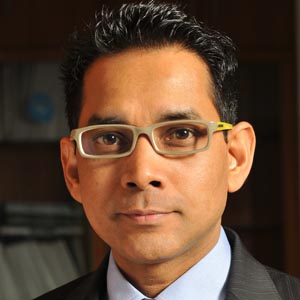
Ravi Kiran
Ravi Kiran
I help ambitious businesses in Middle India scale. Rapidly and properly.

Why you must learn to ‘let go’, if you are an ambitious business owner
My partners and I have been traveling through Middle India rather aggressively over the last  few months. As we hear business owners talk about the immense growth possibilities they foresee and challenges they need to deal with, one area that gets naturally discussed is talent. Finding and hiring good talent is a concern for many.

Although most business owners we meet need a bit of help in articulating their real issues, it appears after some discussion that they understand the criticality of people.But to them ‘finding and hiring people’ is the solution. Now, to someone like me, a city-experienced career manager, ‘finding and hiring’ would always appear to be only a part of the solution, what remains is the broader issue of how to optimise human capital and balance productivity and engagement. I cannot but help compare the Middle India practices to that of Metro India, when it comes to this important challenge faced by any growing business.

There are many facets of talent management in Middle India that would look like highly desirable best practices even from the big city trained HR management practitioner’s viewpoint. Indeed, many practices there are quite advanced by classical standards, even if they are applied intuitively rather than methodically. But hidden inside some of those practices are natural growth stoppers.

The biggest one, I am coming to some sort of a conclusion, is the trouble a business owner has ‘letting go’. To me, the willingness and ability to let go on the part of the promoter-owner-CEO begins to define the working culture of the organisation. It affects not only its attractiveness to prospective employees, but in a more direct, although quite invisible way, the workplace productivity and long term morale of the current workforce.

It is not difficult to see why the owner may not want to let go. His business is either inherited or very often built painstakingly to a certain size over several years. When you have built the business from the ground up, it’s easy to hold close to your heart the idea that “if you want it done right, you have to do it yourself.” This is one of the reasons why many growing business owners have the temptation to go back and over-supervise an employee or worse, actually perform a functional role for an extended period, instead of worrying about leading the business. If the business is expected to grow at a flattish pace, it is perhaps okay doing this, but what if you want to put it on a very aggressive growth path? Can you afford not to delegate and empower? It may be worth remembering another old saying “what you got you here, won’t take you there”.

Here are seven so-called Middle Indian ‘best practices’ that are all excellent, but if not managed well, they can actually come in the way of letting go, and eventually stop growth in its tracks.

1. Hiring based on familiarity and trust: Most employees in growing Middle Indian businesses are hired on reference. Which means at senior and middle levels, almost every employee is related to the owner in some way [immediate family, extended family, school friend] and they have been hired in the first place because they are ‘trusted’. At other levels, they may be some other employee’s immediate family, extended family or a school friend. This appears the right thing to do because ‘in our town, everyone knows someone’.

Existing familiarity removes the anonymity at workplace that is so prevalent in larger organisations. Familiarity can actually make teams very cohesive. That’s a good thing. But over-dependence on familiarity means something else gets neglected – job competence. When you don’t hire competent people or can’t train them to be so, you find it difficult to trust their ‘ability to do a job’ as well as you can do, even while you trust them in a human kind of way. When you cant trust someone’s ability to do a job well, you can’t let go.

2. Know every employee: Knowing every employee is a good thing: It creates a ‘caring leadership’ image and makes employees loyal. But very often, knowing gets restricted to the employee’s personal life, family issues, rather than job related strengths and shortcomings. In the absence of a formal talent management process, the knowledge about the employee becomes personal, not organisational.

3. Treat the Organisation like a family: Which leader does not want to believe and make other people believe that the organisation is a family? It’s a good feeling to work in a family like environment. But organisations and their leaders have a greater responsibility towards the individual employee than just create an environment of bon homie, which is pretty much where the family treatment often stops.

For example, in an organisation, some people perform well, and others don’t. If an organisation does not know how to re-train, re-assign and if required, relieve people, the overall organisational competence will drop over time, customers will suffer and growth will be no more than a philosophy. Families don’t have a concept of deadwood, organisations have.

4. Hire for the organisation, not just a job: The competence issue resurfaces here. In large organisations, it’s a good thing to bring in talent and let roles grow around them. Small, growing organisations don’t have that luxury, if they have to run a tight ship.

Often we find people being hired without a clear role in mind for them, and they become free floaters, doing odd jobs, being the CEO’s runner and frequently his eyes and ears. Not only can this create a bloated, under-productive workforce, it can bring down the team morale significantly.

5. Hierarchies are for the military, not for my firm: Flatter organisations are better. But there’s a downside to being too flat too soon. All firms start flat. The moot point is how flat they remain as they grow. When organisations create un-guided flat structures, everyone wants to run to the owner-CEO to find the solution to every problem. Up to a certain size of the organisation, this is manageable and can actually give the owner-CEO a sense of being in complete control. As the organisation grows however, decisions can get delayed, control too centralized and productivity can suffer, in the absence of a strong working hierarchy. It is said that all employees learn most from a direct boss and direct subordinate. When a truly flat organisations has only one boss, learning nearly stops.

6. Informal, on-the-job mentoring is the best way to teach: I have always believed that this is an attempt to not build formal training and development programmes. On-the-job mentoring offers rich supplemental learning, but should it be the dominant or only method of skills development? No sir; that does not work. The fact is, most growing, owner managed businesses don’t think of creating a training and development budget. That means people can take a long time learning skills and developing attitudes that can help the owner develop the confidence to let go.

7. Let an employee’s role and career evolve naturally: This is good in theory, because it is based on a cosmic view of time. Natural evolution is supposed to be healthy. When it comes to careers though, casual and unplanned approach is not a good thing in general. When careers are guided properly, people are made ready to take over from someone else and as people learn to take over responsibility from other people, the organisation grows and the owner can ‘afford’ to let go.

I am not a trained HR professional, but having run large teams and scaled companies, I have learnt a thing or two about people and how they are encouraged to give their best. ‘Letting go’, no matter whether you are a mid level manager, a CEO or owner, is one of those big lessons I have learnt, is critical.

In planning to let go, as an owner, you learn to create well thought through and productive structures, hire smart people, enable them with the right tools and technology, allow them to take decisions, build teams, create a performance culture, then measure performance and truly empower them. Empowered people, all of us know, are more engaged and more productive. They drive the organisation, without having to be spoon fed. When your people drive the organisation, you can let go, and take that vacation you really need.

Think.

Disclaimer: Not all businesses in Middle India are equal. Most of the challenges mentioned above are faced by really ambitious businesses on the threshold of an explosive growth phase. Also, we usually end up meeting companies with a turnover of between INR 30 Cr and INR 200 Cr, because it is these companies we help grow. Since this may not be representative of the universe of firms in Middle India and the companies we meet are not chosen randomly, the commentary given in this post should not be read as research finding.

Please also forgive the usage of the masculine pronoun ‘he’ through out this post. It is just meant to make for easy reading. No offence to the female business owners.

How money sitting outside the books poses a threat to growth
Sometime in the first quarter of 2010, the Mint staff writer Deepti Chaudhary wrote a telling piece describing how small town businesses are finding it difficult to attract VC money. It felt odd and somehow, ‘unfair’, that VCs would ignore a geography that I felt was going to be a key driver of the next chapter of India’s growth story. [That article formed part of the basis for my friends and me to launch our advisory for businesses in Middle India, but that is not the point of this post].

Over the last few months, having met several VCs in big cities and businesses in Middle India, I am beginning to understand one of the reasons VCs are shy of putting money in those businesses.

It’s what you may call the ‘parallel balance sheet’, the business equivalent of the parallel economy. Now, not reporting part of your business income may not be a sole privilege of businesses in Middle India. Perhaps it’s equally prevalent in big cities and in all kinds of businesses in India. But I am pained by the inefficiency this money creates for a company looking for rapid growth.

MORALITY ISN’T JUST PHILOSOPHY One dimension of this issue is the morality of informal business dealings creating and often using unreported income and how much strain it may be putting on our country’s financial planner’s calculations. And indeed morality and ethics is an issue in business, it’s not something we can avoid any longer, not while our collective consciousness is being attempted to be woken up from slumber against graft in public life. It is true that for many businessmen, it has been a fact of life to run a parallel account consisting of cash. “It’s the way of business, sir, we can’t change it,” admitted a young first generation businessman to me in a recent trip. In fact, another gentleman told me of an accounting software available in the market that can help you manage balance sheet A versus balance sheet B. Apparently, in some of these you can programme a key on the keyboard to delete all the Type B data on a single keystroke, when the taxman comes calling.

The poignant part is many businesses may not even be aware that they are doing something wrong by maintaining two sets of books. “How else do I manage [read, grease palms] those in power to control my approvals?”, asked another entrepreneur, “they aren’t going to  accept a cheque!”. On a dias in front of nearly 300 people in an event I attended recently, a successful businessman spoke of the existence of a ‘rate card’ of bribe in the local civic body and how he was asked to pay five lakh rupees [USD 10,000] if he needed some land surveyors to do their work fast. [‘working fast’, we all know, actually means ‘doing your work and not delaying it without reason’]. A realty company owner told me, “Often customers want to give me part cheque and part cash and ask for the agreement value to be lower, so that they can save stamp duty. What am I supposed to do? I can decline the proposal, but who knows whether I will have a business tomorrow if I keep doing it?” The more I talk to people, the  more interesting are the justifications I hear, making it sound as if having cash sitting outside books for miscellaneous purposes like these is one of the most practical things to do, and is often a compulsion.

CASH MAY KILL GROWTH The second dimension of the issue is that of efficiency of money. When 40%-50% of your income is sitting outside your books, it also reduces your ability to borrow formal money by that extent. And for growth oriented businesses with turnover of no more than Rs 20 -30 Cr, it would appear that a large part of the income is indeed sitting outside books, carefully managed by the ‘well-meaning’ chartered accountant, a man usually the business owner depends completely upon.

This approach may appear smart and practical, but in my belief, it also keeps companies crawl in their growth trajectory. Think about it, one reason software services companies may appear to have grown really rapidly, is because often their clients are sitting in the USA or Europe and they certainly aren’t paying cash.

It’s possible that different professionals may have different views, but I have managed companies long enough to have developed a conviction that the cleaner a book you keep, in general, the stronger a reputation and company you will end up building. Too clever book keeping can sometimes land companies in trouble.

We live in a world where ‘financial prudence’, ‘corporate governance’ and ‘disclosure’ are more than mere management jargons. Companies are built and destroyed based as much on how much money they make, as how they make it.  Enron, WorldCom, Satyam and many other enterprises are bright examples of corporate greed, misconduct and abuse of accounting rules. Many growing enterprises may feel that they are too small to be caught and they can get away. But it’s not about whether you can get away; it’s about whether you want to do something that forces you to try to get away.

More importantly, to fuel growth, you are going to need someone else’s money sooner or later – banks, private equity firms, and even public. Why would someone want to give you money if they believe that you are managing parallel and ‘creative’ balance sheets?

They say being cash rich is a good thing for your business. I agree. But if that cash is sitting outside books, you are actually starving your business of essential growth nutrients.

It’s worth a thought.

Except in e-commerce and technology, most people start thinking of a business that would serve the immediate locality. It’s simpler to think of customers sitting next door to you than those hundreds and thousands of miles away. Expansion of geographic scope comes later. This is the reason why we see many Middle India’s entrepreneurs build robust and profitable companies, but unknown to many of us until we visit their towns.

I guess something else must have been going on in the minds of Milind Chittawar and Shashank Garg of Nagpur when they started their respective businesses.

In many ways, Chittawar and Garg are very different individuals.

Chittawar’s self-effacing personality is the first thing that hits you when he starts talking about his career. He makes each of his ‘setbacks’ look very planned and achievements accidental. Son of a Public Works Department engineer, he tells you how he almost missed getting into even an Engineering Diploma because his name was third on the waiting list. Although he eventually got his graduate and then post graduate degree in Engineering, his modesty expresses itself when he says “I am extremely thankful that I failed everywhere”.

Today, he is the owner and CEO of SEE-Tech Solutions, a consulting and technology company that focuses on safety, environment and energy and helps businesses optimise their energy consumption amongst other things. Unlike many other consultants, he is working on at least one client [based in Mumbai] where his remuneration depends directly and solely on how much energy he can save for a large company, whose energy bills must be running into crores of rupees every month. In his energy conservation demo laboratory in Nagpur, which he claims is India’s only such lab, he can already demonstrate 20 out of a possible 150 conservation measures. “Within 3 years”, he says, “I want to be able to demonstrate all 150 measures, convert my lab into an energy museum. I want people from the USA and Japan to visit my lab to see conservation at work”. He has already invented potentially revolutionary energy improvement products including one that can improve the productivity of automotive air conditioning and saving fuel consumption.

Chittawar’s businesses could have been based anywhere, but he chose to remain in Nagpur, an excellent city, but not quite as well known for business as its cousin Mumbai. “In Nagpur, businessmen have always used professionals to grow their business. I want to show the other way.”

Shashank Garg – I would imagine he is 10 years younger than Chittawar – isn’t immodest either. But he is supremely confident and equally passionate. Like Chittawar, he is in the knowledge business, he also helps businesses improve productivity and build competitive advantage. He too would not want to move out of Nagpur to build his business. Garg is the Founder and President of InfoCepts Technologies, a business intelligence company that already employs nearly three hundred people and is hiring more, serving clients in just one market – the USA.

Unlike Chittawar though, he followed a less radical career path, finishing his graduate engineering [also in Metallurgy, coincidentally] in Nagpur’s venerated VNIT,  post-graduation in the USA, followed by his first job there, and then  returning to Nagpur in 2003 to set up InfoCepts. Unlike Chittawar’s 248 connections on LinkedIn, he has 500+, which could be a 1000 or more in reality.

Now, I haven’t analysed Garg’s company balance sheet [nor Chttawar’s], so I cannot comment on how well the company is doing financially, but then, this isn’t about financials.

This is really about what keeps ambitious people like Chittawar and Garg in ‘less fortunate’ towns like Nagpur and what opportunities they see and the challenges they face. When you talk to these two gentlemen, not for once will you see a hint of regret that they stayed in Nagpur, instead of relocating to a bigger city. The fact is, they chose to stay in Nagpur and build businesses. Even more important, unlike many entrepreneurs in towns of Nagpur’s size, they haven’t allowed their ambition to be scaled down.

Chittawar wants to grow his revenue 50 times over the next decade, create new jobs and make Nagpur a visitor attraction in energy conservation. Mr Garg takes pride in not chasing growth for its own sake [“we are not under any pressure”], but is very proud of the product he delivers, the customers he serves and the number of jobs he creates. He is deploying some of the best global practices in creating a participative workplace and although he didn’t say it himself, my guess is he wants InfoCepts to be known some day for its workplace practices, something very few Indian businesses really care for.

They are not without challenges.

Chittawar feels he needs mentoring and help in business planning, if he were to scale his consulting only company successfully and reconfigure his client composition. I feel he has another challenge of protecting his IPs, which he hasn’t quite thought of. Garg is worried about how the company culture may change as it transitions from a few-dozens to many-hundreds employee organisation, as he creates his second line leadership.

What inspires me about these two gentlemen is their focus on creating employment and their clarity of thought. I am confident that in a few years, both these companies will be case studies. I also have no doubt that they will face new challenges on the way.

But like someone wise said, it’s the speed bumps that give the highway its meaning.

(Based on conversations with Milind Chittawar and Shashank Garg in Nagpur in January, facilitated by Jay Chopde of Persistent Systems)

Last week, I got an excellent opportunity to listen and learn, when I was in Nagpur, Maharashtra for a day and thanks to some kind help by Jay Chopde, a fellow member of the Indian Angel Network, I managed to pack seven intense meetings into an eleven hour work day, between flights, listening to some very smart entrepreneurs from that city. From a pre-revenue start-up looking at raising funds to a large high end business intelligence company working for some very well-known American companies, I found each company and its story exciting and inspiring.

My old boss and friend D Sriram used to say, “If you haven’t been hit by Life with a big setback, you probably haven’t got an opportunity to learn much from it”. A Chinese friend of mine used to say that the biggest job of a speed breaker is to help you appreciate the thrill of racing on a highway.

When I met Anil Adamane, the 40 year old, tattoo-on-right-forearm Managing Director of Legaato Hair & Skin International in the TiE office, I remembered Sriram and my Chinese friend. Would he have been as resolute in his mission to create a legacy, if he was not betrayed [not his word, ‘dost hai mera!’, he still says] by a close friend in 2008, bringing down his INR 18 Cr (USD 4 MM) Bellezza salon business, built over 5 years, to zero almost overnight? Adamane could have fought back, taken legal recourse to snatch the business that was rightfully his. He could have fought a media assisted battle perhaps. After all, he wasn’t a particularly unknown man, having been featured by national weekly Brand Equity earlier that year, as an example of rising retailers in India’s Tier 2 cities.

But he didn’t do any of that. He became ‘sad’ for a few months, and then decided to re-build the business under a new name, to create a new ‘legacy’. He adopted an Italian translation of that word and created Legaato. In about three years, he is up to nearly INR 5 Cr (a million US dollars approx) annual turnover with 10 outlets spread over Nagpur, Pune and Ahmedabad. His four brand portfolio is clear as daylight in his mind, with offerings targeted sharply at different market segments. He wants to grow his business tenfold in five years and then double it in another five. Something tells me he was being conservative in describing his ambitions to me. I have not done a deep analysis of the spa business in big cities, but I guess at INR 1400 (USD 30 approx) average ticket, his Six Elements Spa in Nagpur, a city nearly a fifth of Mumbai’s size, isn’t doing badly.

Is Adamane’s story one of success? Perhaps. But more than success, I find two lessons inspiring.

  1. How do young first generation entrepreneurs really bounce back from a huge setback, in real life? It may look simple, but how easy is it? How did Anil Adamane feel to have his ten years of labour of love taken away from him and then think of rebuilding, without the slightest sense of vengeance?
  2. How do entrepreneurs use emotion as a tool to build businesses? It would have been quite plausible if Adamane had slipped into a prolonged state of depression when he found himself without a business on returning from the L’Oreal sponsored study trip to Paris. Instead he felt obliged to start a business to create employment for the dozens of Bellezza employees who quit the company following his departure.

Worth a thought or two.

DISCLAIMER: All facts as narrated by Anil Adamane, not independently verified.

The favorite phrase the world uses to describe businesses which have not yet reached a certain size is SME, sometimes referred to as SMB, the Small and Medium Enterprises. World over, Governments and industry associations take extra care to nurture such businesses through regulatory support, exposure through training and workshops, and financing. That’s the good part of being an ‘SME’.


Then there is the part that many businesses find a tad insulting. This is what I started discovering as I started a very interesting and ongoing field trip to understand businesses in India’ Tier 2 and Tier 3 towns, beginning January 2011. First thing that hit me is that not all SMEs are similar in their world view, their history and their ambition. And not everyone wants to remain small or medium just so that they can be treated with kid gloves.

It’s a simple observation, but if you sit down and think about it, the underlying issue is quite inspiring and sometimes, disturbing. While there are a lot of advantages to being small in size, businesses which have a real big ambition, somehow don’t feel flattered being called SME. They would rather be big, employ hundreds and thousands of people, drive great social value in the communities in which they live and create a legacy the future generations will be proud of. While collectively they are lauded for their contribution to GDP and employment, individually they are mostly treated with a tone of patronization and condescension.

Years ago, the small or medium entrepreneur didn’t mind that, partly because his ambition was limited. That world is no more. Ambition has a new meaning and a new address today and the earlier we recognize it, the better for our common good.

Some people say, “what’s in a name?” In my view, a lot. No matter what your child’s height, how would you like it if his friends call him ‘shorty’?


About Me
As a child, I used to wonder where mosquitoes in winter hide, why fish keep swimming, how birds learn to fly and other such un-natural occurrences. After a career in marketing & communications for over 20 years, building and running businesses of excellent size and in many a geography, hiring and training dozens of successful managers, I continue to be aggressively curious about beings and things.

Today, as a founding partner in Friends of Ambition, a growth advisory company three friends of mine and I started recently specifically with the aim of assisting and guiding ambitious businesses in India’s mid-sized towns [we call them Middle India] in chasing their dreams, I am curious about 1st and 2nd generation business owners in that geography. As I often find myself in cities and towns I might have only heard of just a few months ago, meet business owners there and hear their stories, dreams and challenges, I feel a sense of elation and sadness, sometimes simultaneously.

This blog is a chronicle of my experiences in Middle India - mostly gleaned from real life encounters with business owners, their influencers and well wishers.

Scaling a business is something I have been fortunate to learn firsthand, as I helped build and ran several businesses for Starcom MediaVest Group, a part of Paris based Publicis Groupe, as its CEO- South East and South Asia.
Ravi Kiran's Activity Feed
May 02, 2012 06:02 am by Shashank
Great article, well written Best Regards. Shashank
Ravi Kiran
Ravi Kiran
April 10, 2012 08:21 am by Ravi Kiran
Hi Shrikant, have written to you personally. Please respond directly when you have time.
April 09, 2012 23:17 pm by Shrikant Raipure
Hello Mr. Ravi, Thought of checking with you again, i waited for your reply, could you guide me here! Thanks, Shrikant Raipure
March 13, 2012 18:15 pm by Bhushan
On the contrary, I found that in tier II & III cities no business can happen without paying in cash. Recently tried buying house in my native but could not since no body wants payment through cheque which is not avoidable if taking home loan from bank. I am not sure when I will be able to do since t...
March 09, 2012 18:12 pm by Bhuvan
Agree with the observation. It is not just small business owners and traders but even many small to medium size listed companies work around the system. I like the content under "MORALITY ISN’T JUST PHILOSOPHY" // This parallel economy, as i like to think this is..is the result of the system we ha...
 
Most Popular
© Copyright 2012, Forbesindia.com     All Rights Reserved