Follow
NS Ramnath
NS Ramnath
I write about business and technology
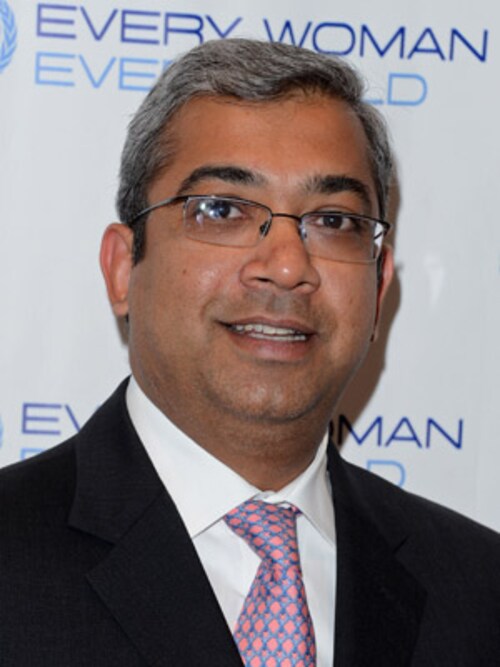
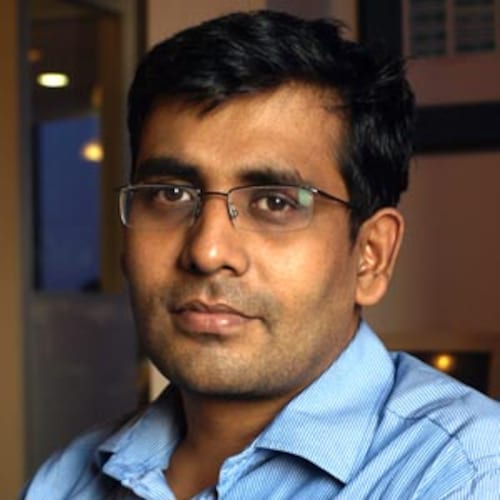
Phaneesh Murthy, president and CEO of iGate, poses during the World Economic Forum (WEF) in Davos

Does iGate have a future without Phaneesh Murthy? (Photo: Reuters)

Late last year, when iGate placed a series of aggressive ads in leading American newspapers such as New York Times and Wall Street Journal (with captions such as “Conspiracy Uncovered”; “Mega Corporations’ No 1 enemy exposed”) to promote its own outcomes based pricing model many IT executives here were amused because the outcome based pricing came with limitations.

The traditional pricing model was simple, less complicated and easier to scale. Several customers preferred the simplicity of the traditional pricing model. Outcomes based pricing – where a client is charged based on business outcome rather than on the number of hours software engineers put in to write the code – would be a tough sell. But to stand out in the clutter of a scores of Indian IT companies, each indistinguishable from the other, iGate needed a bold new approach. This bold and slightly risky approach was classic Phaneesh Murthy, the then CEO, who was sacked by the board recently.

Invariably described by people who know him as a supremely confident person, Phaneesh himself both understood the enormity of the challenge and his own ability to deal with it. He told Mint last year:  ”Today, everybody tells me you are not going to succeed, you don’t have the scale, we have hundreds of thousands of employees, you are in a cost-plus model… But I (want to) shift the model to one where technology does more of the work, rather than people doing more of the work. If I can achieve that objective, that will be hugely satisfactory of twice over transforming the industry.” Without Phaneesh, iGate will have to seriously reconsider its strategy.

Business historians and management gurus don’t look kindly on charisma. Those endowed with it are often impractical (which means their vision is more likely to fail than succeed), they lead their team members into a reality distortion field (there’s no feedback) and often destroy shareholder value than create it (the rare exceptions are given a lot of publicity. (The title of Rakesh Khurana’s much cited essay on charisma reads: The curse of superstar CEO).

But, charismatic CEOs are often useful for specific purpopse – to transform an organisation or an industry. (Think Steve Jobs) iGate, and in someways even Indian IT sector, was dependent on the charisma of Phaneesh Murthy.

Scale up is difficult in any business but it is even more so in IT services. With every $100 million dollar change in revenue close you have the added complexity of managing approximately 3000-4000 more people. With more people come more processes and complicated workflows. Also, clients prefer to do business with more cash rich and stable firms. In the last 15 years only Cognizant has bucked this trend to become the second largest IT services firm from India.

The bottomline is that if you fall behind on the IT services revenue treadmill you don’t get a second look.

It was expected that iGate, under Murthy, would buck the trend and go on to bigger things. That’s why Apax Partners sunk in $380 million to fund the deal with Patni. There is also a billion dollar of debt on the firm. All this was done with Phaneesh’s reputation as rainmaker.

The consolidation in many ways is still a work in progress. While industry observers tend to look at the transformation of iGate by comparing pre and post-Phaneesh Murthy days (when margins swung from negative to positive, and its revenues grew at a pace that worried competitors) a more useful timeframe is post-Patni acquisition. There the record is mixed. Its margins wavered (in the most recent quarter its gross margins dropped), it has missed its guidance, lost accounts and market share. Its share price movement (even before Phaneesh’s removal) in the last three months resembled the hump of a camel. It needed Phaneesh to take the company forward.

With him gone, all those hopes may well be history now! In the end, the business historians and management gurus are probably right about charisma.

iGate was betting too much on it.

What Google Trends say about IT firms
Google Trends hit the headlines late last month when three academics – Tobias Preis, Helen Susannah Moat and H. Eugene Stanley - published a paper that said “Google Trends data did not only reflect the current state of the stock markets but may have also been able to anticipate certain future trends.” (That the lead author has a PhD in theoretical physics, and the other two work in physics department at Boston University says something about importance of intersections.)

I spent some time looking at Google Trends for IT Services companies with a very modest ambition. To see if they will say something interesting at a glance.

Two takeaways. One, financial performance matters: While interest in all IT companies seem to be waning, there’s a big fall for the companies whose financial performance, specifically growth rate, is poor. All these companies employ more people than they did in 2005, have more customers and earn more. The big change is in the speed at which they were growing. Two, locations matter: For Infosys and Wipro, the two Bangalore based companies which have their biggest centres in Bangalore, there’s a high level of interest in Karnataka. For the other three, predominant interest is from Chennai. It’s not about where the top managers sit. Neither TCS nor Cognizant is headquartered in Chennai, but both have their biggest centres there.

(Click on the image for a bigger version)

Google Trends


European Market: Are IT companies there yet?
Social, Cloud, Mobility, Analytics and Big Data – the commonly heard buzz words might be the big drivers of growth for IT companies in the future, but right now almost every analyst I have spoken to say three segments are the key: remote infrastructure, platform-based BPO and Europe. If you want growth in the next couple of years, it’s likely to come from these.

Media focus is increasingly on Europe. A recent Economic Times report quoted a Nasscom official who said at least 20 European R&D facilities have been set up in India in the last one year. And at least 3000 jobs were created by new centres started by European firms. These numbers are important because it shows European companies are increasingly comfortable with offshoring, moving work overseas, even if it’s not to a third party firm. A bigger scale outsourcing could follow. A Mint report today says for many companies Europe is growing faster than US. But, then again, the base is smaller. The next few quarters will give a clearer signal.


Also of interest
4 Ways Eye-Tracking Technology Will Change Our Lives | Popular Mechanics

But these implementations of eye-tracking tech are mere gimmicks compared with what the future of eye tracking will hold, including changes to the way we drive, play, read, and, of course, advertise


Uninor to rope in auto drivers, milkmen to sell SIMs, recharge | Business Line / PTI 

The project has kicked off with 10 auto rickshaws in Pune as a pilot. This number will soon be scaled up to 40 such auto-rickshaws.


The Muse’s Kathryn Minshew: Tech Needs More Visible Female Role Models | Xconomy 

“In the Valley it was often very hard for us to get perspectives of people who were not in tech,” Minshew said. Returning to New York offered the advantage, she said, of access to more diverse industries.


The Naked and the TED | The New Republic 

Evgeny Morozov’s scathing review of Parag & Ayesha Khanna’s book Hybrid Reality: Thriving in the Emerging Human-Technology Civilization

The recipe is simple. Find some peculiar global trend—the more arcane, the better. Draw a straight line connecting it to the world of apps, electric cars, and Bay Area venture capital. Mention robots, Japan, and cyberwar. Use shiny slides that contain incomprehensible but impressive maps and visualizations. Stir well. Serve on multiple platforms.


The myth of Inbox Zero and the path to peace of mind | Gigaom 

… so long as opportunities exist or work is in progress, your backlog of to-dos will always be greater than zero, no matter how you track them, define them, or how quickly you complete them.


HCL Technologies, founded by Shiv Nadar, has often been called the dark horse of Indian IT. It’s also in some ways a paradox. And that came to the forefront when several fresh engineering graduates who received offer letters from the company went on a protest. The protests were in stark contrast to both its financial performance in the recent years and the ‘Employees First, Customers Next’ philosophy it propounds.

Consider. Its revenues have been growing faster than the industry average, when companies such as Infosys and Wipro are struggling with growth. Its profitability has gone up in the recent quarters, surprising many industry analysts. While its peers are struggling with huge bench, its employee utilisation rates are around 80%. As a result, its employee productivity, measured by revenue per employee, has been going up. (For others it has been coming down).

The market has responded positively to all these. In the last one year, HCL Tech has done better even than TCS in NSE. On the top of all these sits its philosophy of ‘Employees First’, also the title of a book written by its former CEO Vineet Nayar.

A story in the latest issue of Forbes India argues that a closer look at the performance and the philosophy gives the answer to this paradox. While HCL has been growing faster than the industry, the growth has been primarily driven by Infrastructure management, which has a different business model compared to regular IT Services and requires different skill sets. (Even the designations are different.)

Similarly, while ‘Employees First’ philosophy gives an impression that the company gives primacy to employee satisfaction, it’s in fact about employee contribution. The philosophy came out of the recognition that a company creates value in the zone where an employee engages with the customer. Employee first approach is about helping employees to create that value. So, there’s no point in hiring an employee, when he will have no job to do, or for that matter keeping an employee in the bench.

HCL’s recent results were in line with this analysis. Its growth continued to be driven by infrastructure management. (And software services segment grew only marginally – by 1% compared to previous quarter, and by 4.8% compared to same quarter last year.) Its headcount addition is minimal. Its attrition rates are high. But, its revenue per employee numbers shine.

Is it a good thing? In one way, it is. After all, it’s not just HCL Tech, but the entire IT Services industry is trying hard to move to a non-linear model. IT managers across companies believe that linear growth (where hiring goes up in proportion with revenues) is unsustainable. Now, HCL Tech’s numbers show it’s able to get more revenues with less number of people.

While that seems to answer one question, it raises a bigger question of whether it’s sustainable. Kotak Securities is among the firms that are skeptical about this. In a note it wrote to its clients just after the results, it said: “We remain cautious on the company’s business model and find the profitability of the company unsustainable. Seemingly inexpensive multiples have to be seen against the backdrop of high risk business model and unsustainable margins.”

The key question about HCL Tech is not whether it’s getting more contracts in infrastructure management, but whether it has anything beyond infrastructure. It’s in this context that employee metrics are important.

Should Infosys hire an external CEO?

Mint reports, some directors on Infosys board want the search for its next CEO “to include external candidates because the company’s current management is struggling to regain its past glory.”

So far, top Indian IT companies have shown preference for internal candidates. N Chandarasekaran, who took over from S Ramadorai, is a TCS veteran who started his career there. Francisco D’Souza’s story is no different. He was hired by Dun & Bradstreet from Carnegie Mellon, when Cognizant was its IT arm. The joke about Infosys is that it not only prefers internal candidates, but it wants them to be from the close circle of founders.

In someways having an internal candidate is good. An insider typically understands the culture and knows his/her way around. It says something nice about the company – developing future leaders and having a good long term succession plan are good management practices. In fact, some studies suggest that, in general, internal candidates outperform external candidates. A 2009 study by James S. Ang of Florida State University and Gregory Leo Nagel of Middle Tennessee State Universitym which looked at CEO transitions in a 30 year period concluded that “in large firms, internal hires provide significantly higher median performance, equal chance of the highest performance, and lesser chance of low performance….. In the aggregate, internally promoted CEOs are associated with at least 25.4% greater total financial performance than external hires”

So, should Infy stick to internal candidates? The answer is ‘No’. Continue reading

The clearest signs that Infosys has started to do something about its dismal performance came on a day when the markets dumped the stock like never before in the last 10 years, when analysts panned it as if its numbers were a personal affront and when the media seemed to almost write it off.

On Friday, a day after Karnataka celebrated Ugadi or new year, Infosys said it would grow slower than the industry in the coming year – at 6-10% compared to Nasscom projections of 12-14%. It didn’t give EPS (earnings per share) guidance. Just last quarter, it seemed as if the company would meet its full year guidance. It didn’t. Its shares were down 20%, the biggest fall since 2003.

As in the last several quarters, Infosys blamed the macroeconomic environment for its performance and sought more time for its new strategy based on products and platforms to yield results. Infosys CEO SD Shibulal tends to repeat his key message in the form of a phrase or a word. Yesterday, the word was ‘volatility’.

But there were also signs that Infosys has changed tack.

For long, the stock market loved Infosys, and in some ways, Infosys played to its whims. It’s most evident in the way the company outperformed its own guidance. Its annual revenues went ahead of its guidance by more than 10% in four out of last 12 years. Contrast it with Wipro, which doesn’t have to pander to market the way Infosys does, because Azim Premji owns most of it. Here’s how the chart looks like.

infy chart

So, what’s wrong with stepping on the guidance treadmill? It consumes a lot of management time and energy, it shifts the attention to short term, and studies suggest, it doesn’t even result in higher valuation. Some years ago, McKinsey looked the scene and found that the costs of earning guidance outweighed the benefits. It wrote

When Coca-Cola stopped issuing guidance, in late 2002, its executives had concluded that providing short-term results actually prevented management from focusing meaningfully on strategic initiatives to build its business and succeed over the long term. Instead of indicating weak earnings, Gary Fayard (who was then CFO) believed that the move signaled a renewed focus on long-term goals.

In fact, some leaders have gone a step further and even questioned the practice of quarterly reports: Unliver’s Paul Polman, writing in Forbes India’s 3rd Anniversary issue argued ‘The requirement to report back to investors every 90 days distorts behaviour and priorities. It is absurd for complex multinational companies to have to invest huge amounts of time preparing detailed income and margin statements every quarter.’

The good news is Infosys seems to be taking some baby steps towards it. A few quarters ago, it stopped issuing quarterly earnings guidance, and this quarter it declined to give EPS guidance. (Even its revenue guidance has a rather wide range of 6-10%. (Another unrelated move, but philosophically in the same direction, is its decision to increase the fixed component of employees’ salary. It reinforces long term thinking.)

Shibulal insists that the reason for not giving quarterly guidance, and for keeping its annual guidance under such a broad band is the lack of visibility. But, the strains of having to answer questions on the market reaction is clearly showing on the management. It’s not clear if they will decide to stop giving guidance, but the direction seems to be towards that.

The second change is about the story they have been telling the investors – of being an industry leader in growth and margins. Now, there is always a trade-off between growth and margins. (Cognizant, for example, traded some of its margins to consistently deliver industry leading growth.) When IT outsourcing had a huge underlying momentum, Infosys, justifiably, turned its efforts towards margins. Its processes were good, its spend on sales and marketing was optimal and it could even say ‘no’ to certain types of projects. However, when that momentum got lost in financial crisis, Infosys struggled to shift to other cylinders of growth – of getting market share through better pricing, or buying companies or getting into partnerships with them. It was not so much about the ability of the management to shift as it was the mindset.

The press conference yesterday indicated that there is a change in this mindset. Growth, Shibulal said, is one of the best ways to get margins. (In fact, he repeated the growth mantra so many times that a journalist asked if the company would from now on go full fledged after growth). While he used to speak of acquisitions as ‘falling in love’, he spoke about it as a strategic choice to pursue growth. That the company acquired Lodestone last year (besides being more open to partnerships), gives his statement credence. There is still reluctance to spend on front-end marketing (Its sales and general administration expenses as a percentage of sales continues to be low). However, its competitors say it has gotten more aggressive on pricing and taking up projects with skewed cash-flows.

At Infosys, the traditional tightfistedness about acquisitions naturally extended to how it saw investments even within the company. At least two former senior executives told me that it has never been easy to get a new initiative approved by the top management. Even when it decides to go ahead with an initiative, getting a big budget for it can be frustrating. There is a sign that it’s changing too. Infosys announced its setting aside $100 million for a fund that would incubate ideas from within and invest in ideas from outside. By no means is this idea radical, but it certainly indicates a clear deviation from the conservative approach to new initiatives.

While all these are good signs, it’s important to remember why they got lost on the observers. For two reasons. One is the management’s broader commentary on the economy and demand situation today. It’s volatile. Mangers across the world and across sectors tend to underspend when there’s uncertainty, and that’s showing on IT demand. It’s especially harsh on Infosys because of its portfolio mix. Shibulal loses no opportunity to point out that close to a third of company’s revenue depend on discretionary spending compared to about 15% for the industry as a whole. Second, the company also made it clear products and platforms cannot suddenly start driving its growth. It will take time.

Yet, these signs are important because they indicate how the company hopes to steer the ship till then.

Also read:

Will Infosys Make a Comeback? by Sudin Apte – from our Big Questions of 2012 edition.
Has Infy’s new strategy started delivering? - written after last quarter results.

Ashok Soota, Executive Chairman, Happiest Minds (Mallikarjun Katakol for Forbes India)

Ashok Soota, Executive Chairman, Happiest Minds (Mallikarjun Katakol for Forbes India)

When Ashok Soota announced his plans to start a company called Happiest Minds, a week after quitting Mindtree around this time two years ago, the reaction was one of skepticism. Even though he was a respected figure in IT circles, Soota was well past retirement age. (He was 70 then). Besides, the industry was undergoing one of its roughest patches. It had lost its momentum, and the incumbents were chasing growth by cutting prices, grabbing others’ market shares or trying to buy smaller companies. What could a start-up do? Albert Hieronimus, Soota’s successor at Mindtree in a Business Standard interview said: “The question he has to answer is if the world needs another MindTree.”

Happiest Minds has just finished its first full year of operations, and Soota said he will soon give an update on how it has fared so far. It’s not a listed firm, and I am not sure if we will get detailed financial results. However, we will get a sense of how right or wrong his critics were. In fact, some details of his strategy have emerged in the last few quarters..

One. Soota was not exactly trying to set up yet another Mindtree, or for that matter, yet another IT Services company. He looked at the market in a more granular fashion, and focussed on specific parts of IT Services that promised to grow faster, the emerging technologies such as cloud, mobility, social, big data and analytics. There are eye-popping numbers from Gartner and McKinsey about the scale of the opportunity, but they are irrelevant for a start-up. Suffice to say, these segments are growing fast, and Happiest Minds doesn’t exactly suffer undue disadvantage for being a new player.

Two, Soota has now started expanding to adjacent areas that promise growth, with a specific kind of positioning. A case in point is its recent announcement of setting up engineering R&D services. Sandeep Agarwal, who is heading this division says, it’s an example of how it all integrates. On one hand, there’s a growing demand for smarter devices. (For example, a weighing machine that will automatically send the measurements to your phone; or an accelerometer that will sync with another machine that reads your pulse rate.) On the other, Happiest Minds has been putting its resources behind cloud, analytics, mobility etc. Agarwal’s division is now building business cases bringing these two together. Smaller companies tend to do these better.

Finally, these two elements sit on the back of Soota’s reputation as an industry veteran and his heavy duty rolodex. The combination has helped attract talent, get VC investments (Canan Partners is an investor) , and create the impression that while the company is young, the resources behind it come with a long experience.

Does all these mean it’s time for skeptics to eat their words. It’s too early to say. Soota has not always got its calls right. Mindtree’s misstep of trying to get into making mobile handsets is attributed to him. But, with Happiest Minds, he seems to have taken all the steps in the right direction. Whether he has been walking or sprinting, we will know soon.

Bitcoin crosses a milestone

bitcoinThere must be something instructive about Bitcoin crossing $100 in value on April Fool’s day.

For the skeptics, the virtual currency system always had an aura of a Ponzi scheme. No one knows who Satoshi Nakamoto, the designer of the Bitcoin network, is (or for that matter, who ‘Satoshi Nakamoto’ are, for it could be a group). Despite the media attention, the number of users is pretty small. (There are close to 11 million Bitcoins in circulation today). Its value has been as volatile as Virender Sehwag‘s batting in the recent matches, even if the broad direction seems to be upwards. There is a good chance that many see bitcoin merely as a speculative investment. Buy it today, and you can always sell it to a greater fool tomorrow.

But, Bitcoin has a primary use, a more important role to play – as a medium of transaction. Its unique features – it is anonymous, secure, not regulated by governments/central banks, and it is low cost since it bypasses banks/third parties – have made it the go-to currency for certain types of markets online, such as gambling. In future, there will be more such applications. However, all these don’t explain why its value tripled in just a month, and crossed $100 on April Fool’s day.

(For more on Bitcoin, check out this old piece by James Suroweicki in Technology Review  and a recent piece on an exchange that handles 76% of bitcoin trading in The Verge.)


Three views on batteries

Somehow, when talking about gadgets, battery life has become at best the fourth of fifth thing you mention. It shouldn’t be. It should be the very first. At this point, it’s the only thing that matters. ~ Gizmodo


Because battery capacity hasn’t improved much over the years, the batteries themselves have gotten bigger, limiting how thin and light phones can be. Meanwhile, technologies like 1080p screens and wireless screen mirroring have been hamstrung by batteries that can’t keep up. Bad battery life can be an Achilles’ heel for otherwise solid phones; by the time you realize your phone’s battery stinks, it might be too late to send it back to the store. ~ Time


I think the research in the world is largely misdirected. What I mean by that is that the conventional approach for battery research is: ‘Let’s find the coolest chemistry. And then we publish the paper and somebody else should figure out how to make this device cheaper.’ ~ Donald R. Sadoway , John F. Elliott Professor of Materials Chemistry at the Massachusetts Institute of Technology in Mint

Also of Interest

  • Steve Jobs’ long shadow: Gascón said Foulkes discussed the long and laborious process of researching and producing a kill-switch technology for devices, and also said the next two generations of iPhones have already been developed. “They preceded Tim Cook,” the district attorney said he was told of the future iPhones.  | SH Examiner
  • More competition for Dropbox: Amazon turns Cloud Drive into a Dropbox rival with file syncing | Arstechnica
  • Siri, the salesman: Nuance hopes its voice-recognition tech can produce mobile ads that you actually want to have a conversation with. | Technology Review
  • Today’s joke, tomorrow’s reality: Google Nose is not really a joke | Fortune
  • Cool It: Is the Internet Too Hot for Data Centers to Handle? Scientific American


Arun Jain’s plans for Polaris
After the halo of Orbitech acquisition began to wane (incidentally it came to effect on April 1, 2002), Polaris (Software Labs then, Financial Technologies, now) used to hit the front pages of news papers with the boring regularity of President’s Republic Day speeches, under yet another headline that said the company would soon be sold to X, Y or Z. Nothing ever came out of it.

Today, Economic Times reports that Polaris approached L&T Infotech and Wipro to see if they would buy its IT services business (The Chennai-based company also has product and cloud businesses). None of the three players have confirmed.

Polaris management has been trying to restructure the business for sometime now, hoping to unlock shareholder value. Its Price to Earnings ratio has been hovering around 5. Mindtree, which is just behind Polaris in Nasscom’s ranking, has a P/E of 17. A Times of India story last month said Arun Jain, who founded Polaris and has been at its helm through its rough and eventful journey, “plans to retain the software products business with $100 million turnover and plans to scale it up rapidly.”


TCS is now second largest employer in IT Services globally
Here are some interesting numbers from Mint report

IBM, TCS, Accenture


TCS Versus Infosys
Mint very gently suggests that Infosys is getting a little more aggressive. It has become more flexible in its pricing, and has become a little more open with partnerships. (The Bangalore based company has entered into a partnership with IPSoft). And, in a report last week, JP Morgan said TCS might be going in the opposite direction. Reason: In the last four years, there has been no notable acquisitions. Till we have more evidence, it’s best to see these views as a reflection of desires and concerns, rather than of real action on ground.


H1-B Visa Lottery
The idea that life is a lottery has been around for sometime, and it’s gaining ground in the recent years. (Billionaire Warren Buffett often talks about ovarian lottery. Model Cameron Russell’s speech on winning genetic lottery has gone viral). So, there’s something philosophical about the news that US will give out its H1-B Visas through lotteries, first time since 2008. More


Also of interest

A Kickstarter project that you might be interested in: Runner Without A CountryBy Bill Gallagher. A documentary about refugee Guor Marial, the Olympic marathon runner who ran in the London 2012 Olympics without a country.


AllThingsD’s Peter Kafka says a lot about the big trend on the web when he writes: Is this an attempt at an attention-grabbing way of summarizing an extensively reported story someone else produced? Yep! And am I going to (respectfully) aggregate the rest of this piece? Of course!

  • Toronto doctor turns his iPhone into ‘field microscope’ that can detect intestinal worms for less than $10 | National Post
  • Why Computing Won’t Be Limited By Moore’s Law. Ever | Read Write
  • Six Questions To Ask Before Dropping Out Of College To Become An Entrepreneur  | Forbes
  • How the Higgs Boson Might Spell Doom for the Universe | Scientific American
  • Michael Dell Said to Consider Blackstone LBO Only With CEO Guarantee | Bloomberg


TCS, Infosys & Domestic IT Market

The news that TCS is close to signing a Rs 1,100 crore systems integration contract  from India Post, just a week after Infosys bagging deal to manage the postal network’s rural operations underlines the increasing importance of domestic market for Indian IT companies. Domestic market was largely ignored by Indian IT players till IBM woke everyone up by signing a huge deal with Airtel. These days hardly any analyst meet or press conference winds up without a reference to performance in Indian market. The conversations, however, are mostly around IT Services and not around BPO. Are there indications that it will change?

Continue reading

PhDs in IITs: Not just about numbers
Here are three crucial paragraphs from a nice piece on research in IITs  from today’s Economic Times. These capture

a) the context in which the ‘research crisis’ descended on India’s premier engineering institutes (They were founded in that phase of India’s industrial growth in which PhDs were not the top priority, and the industries did not provide IITs an incentive to focus on research),

b) the way IITs are responding to this challenge  (which seems to be typical of any organisation: throw more resources at it. And in this case, since the problem is defined in terms of numbers (‘too few PhDs’), the solution seems all the more relevant),

and c) the crucial piece that could take its agenda forward (the best analogy I can think of is the way economists approached Russia after the collapse of Soviet Union. First, privatization seemed to be the answer, and then the focus turned on institution building. In case of IITs, the attention needs to shift towards governance)

Continue reading


NS Ramnath
I have been with Forbes India since August 2008. I like writing about ideas, events and people at the intersection of business, society and technology. Prior, I was with Economic Times. I am based in Bangalore. Email: n.ramnath@network18online.com


Most Popular
NS Ramnath's Activity Feed
May 08, 2013 13:39 pm by Dinesh
Very True, It will give us a very good picture about client perception. Ram - Can you shed light on this
May 06, 2013 20:40 pm by gopi
ram - didn't understand the x-axis, is it stock price or growth rate or something else? thanks
May 06, 2013 11:27 am by Sanjoy Gupta
Unsurprising that employee and potential employee search intent dominate the overall Google Trends picture. The interesting corollary is whether the delta in growth rate has a similar effect on interest levels of clients. The same graphs with India data expunged would be interesting to view.
April 26, 2013 12:40 pm by Pravish Kuttickat
The analysis is perfect. Non-performing assets and trimming down the fat is the in thing now. Streamlining the base operations and developing new models will be the only way to sustain the growth patterns.
April 19, 2013 16:01 pm by Dr.A.Jagadeesh
Excellent analysis Ramnath. HCL is among top IT Companies in India. Don't they know that the delay in issuing orders of the selection/recruitment affects their reputation and credibility? How to get it resolved? I am sure such a situation won't be there with TATAs. Dr.A.Jagadeesh Nellore(AP),India
 
What I am Reading by NS Ramnath
© Copyright 2012, Forbesindia.com     All Rights Reserved