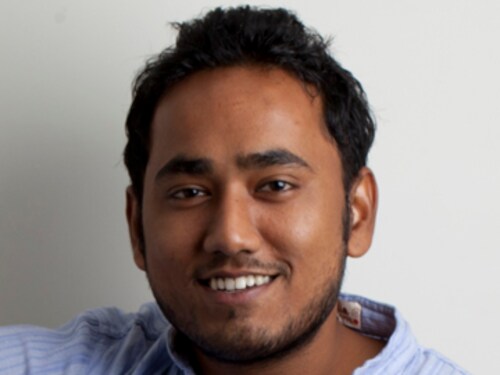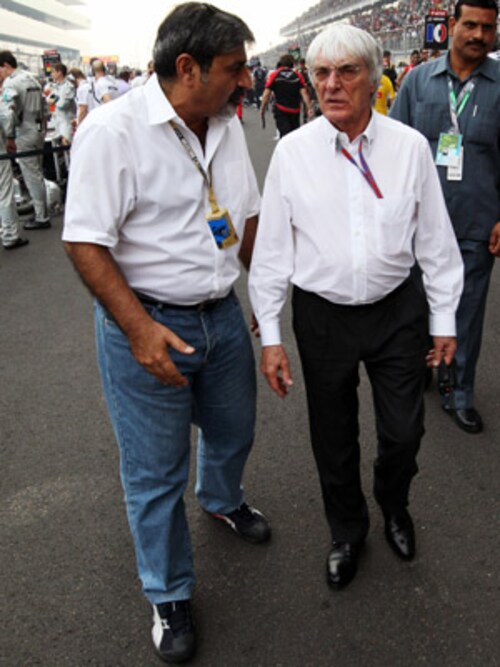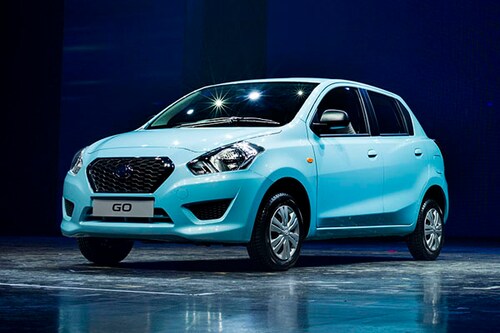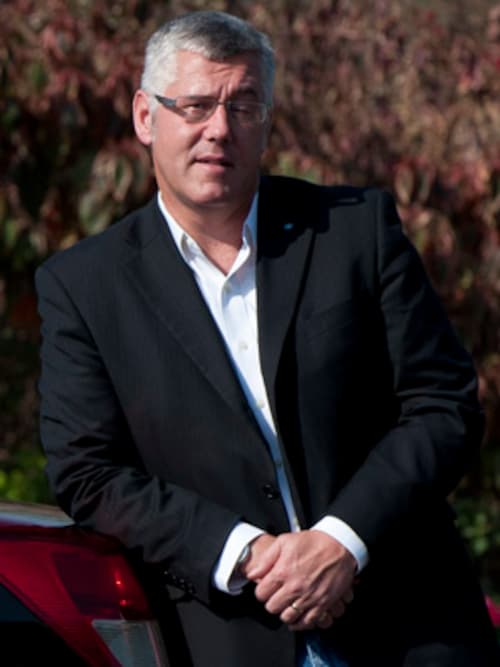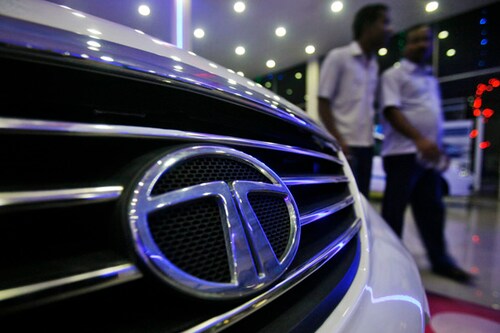
Less than two years after moving into his current role, Niraj Srivastava, head of car product group at Tata Motors is on his way out. Srivastava is joining Audi India as head of sales. It was only in August 2010 that Srivastava had moved to Tata’s passenger vehicle business. In his earlier assignment at Tata, he was the regional manager (West) for the company’s commercial vehicle business. Why is this important?
Well, Srivastava’s exit comes at a fairly interesting juncture for his current employer. Today, about 65 percent of revenue and almost 90 percent of Tata Motors’s profits come from Jaguar and Land Rover (JLR). The India car and commercial vehicles business is dwarfed by the size and scale of JLR. And this new Tata Motors needs a new guy to take over since Prakash Telang, the company’s current managing director is set to retire in June 2012. “It is a very interesting situation now because if an Indian guy is appointed as MD then he won’t be taken very seriously at JLR. And if a foreigner comes in then he has very little understanding of Tata Motor’s domestic car and commercial vehicles business,” says a source who didn’t want to be quoted.
It is unlikely that Mr. Telang will get an extension. The change of guard at the company is likely to be a closely watched affair. Tata Motors says that whatever happens, an announcement will be made in due course of time. Speculation though has already begun and names of key people inside Tata like Bhaskar Bhat, MD of Titan Industries and Ravi Pisharody, the president of commercial vehicles are being talked about as contenders.
It is not that Tata Motors has a very large talent pool of second rung leadership team within the company to choose from. Because if one digs a little deeper, you will notice that in the last couple of years the company has seen quite a few senior executives moving out. And almost entirely in the company’s domestic passenger vehicles business where it sells cars like the Nano, Indica, Indigo, Manza, Safari and Aria. In many ways than one, it started with the appointment of Carl Peter Forster as group CEO of Tata Motors in February 2010. Just a few months later, Rajiv Dubey, president of Tata’s passenger vehicles business and often considered the blue eyed boy at Tata quit in May 2010 after a career spanning 27 years at the company.
To fill in for Dubey, Tata Motors re organized its car business. Nitin Seth, the then head of car product group who used to report to Dubey was sidelined to look after some cross company strategic initiatives. Instead in August 2010, R Ramakrishnan, vice president (sales & marketing) of Tata’s commercial vehicle division was appointed as vice president of passenger cars. Plus Seth was replaced by Niraj Srivastava. Seth finally quit Tata Motors in December 2010. Late last year in September 2011, Mr. Forster quit Tata Motors because of unavoidable personal circumstances.
Sales of Hindustan Motors’ Ambassador fell to an all time low of 2, 506 in the last financial year (2011-12). The year before, HM had sold 6, 500 Ambassadors. The whole company put together (and this includes the sale of vehicles from its joint venture partner Mitsubishi) sold 4, 926 vehicles- about half of what they sold the year before.
Last week I met a senior executive, who had worked for HM for a year. He said, “I read about Royal Enfield’s success this morning in the newspapers. And I couldn’t help but think that at HM we had a golden opportunity to do something similar. But we squandered it.”
Royal Enfield, of course, has had a great run. The company sold 78, 546 motorcycles in the April-March 2011-12 period. That’s 44 percent more than what it sold last year.  However, this number underscores what Enfield has been able to achieve from its 10 acre plant in Chennai. Believe it or not (though estimates have been revised over the years) the plant was built to produce only 30, 000 motorcycles a year. When it began, everything from making seats to frames and tanks, was done inside the plant. This doesn’t happen anymore. Much of the work is outsourced. “Today the plant  is churning out almost a lakh motorcycles a year,” says Venki Padmanabhan, CEO of Royal Enfield. None of this has happened by luck or because of fear from competition.
Padmanabhan, 48, joined Enfield from Chrysler in December 2008. A Non-resident Indian who has spent most of his career in the automotive industry in Detroit. When he was designated COO in 2008, Padmanabhan found Enfield struggling to produce even 140-150 motorcycles a day. The company had started on the path to revival compared to its loss making streak in the late 1990s. “Everyday was a fire-fight. There were issues with painting in the right sequence, getting the right set of headlights from the supplier…several problems,” says Padmanabhan. For him, there was only one way out. Spend the entire day on the plant floor or with suppliers. “I don’t remember being in the office in the initial days,” he adds.
Producing more became the mantra. “The idea was to bring a Can-do spirit in the company. To tell everyone that hey even if we are small but if we do what we are good at, we will succeed. Himmat ki baat hai bas (It is just about being strong),” says Padmanabhan. At the time, Enfield had no paint capacity in its plant so they started painting at the Luna plant at Ahmednagar, followed by another tractor plant and then the TI Cycles export plant paint shop. “Thankfully we were sitting on a great brand which people loved. And this was not on the basis of experiences but it was still there. Enfield did not die like Rajdoot or Yezdi. It was almost like people are waiting for us,” he says.
Now contrast this with what’s happening at Hindustan Motors. There is no doubt that the Ambassador is an iconic car. Like Enfield, it has British lineage. The Ambassador is based on the Morris Oxford. The senior executive mentioned above says, In many meetings the top management promised that a revival strategy was needed, but shied away when it came to execution. The ailing HM is still the flagship company of the C K Birla Group. “When I went for meetings, the Chairman was very interested. During the Commonwealth games  we made some inroads, looked at private contractors, but in the end nothing materialized. HM was not willing to take any cuts on margins. In the end, people at the top must say if they want to continue with the company,” he adds.
While Enfield built on its strengths, over the years it has become quite evident that HM lost focus on what are the businesses it really wants to play in. The company’s foray in the heavy trucks space with Bedford or Isuzu never really worked out. Its joint venture with Mitsubishi is not doing well. Not when the company sells 341 units of the Lancer sedan in a year. In fact, I am keen to meet people who have bought a Lancer last year! More recently, the HM Winner, a 1 tonne LCV has turned out to be a failure. “For quite a long time the sales and marketing guys were struggling to sell the Winner in the East but it never took off. Then we ventured in the South where we sold it as a Cash van to security agencies and as a Garbage van,” says the executive.
It didn’t help that HM has seen an exodus of senior management. According to sources, Manoj Jha who came in as CEO of HM from Escorts was a big disappointment. The exit of Moloy Chowdhury, executive vice president at HM was a big blow. Whatever HM has been able to do in the past few years is all because of him. Again finding productivity at a plant in Kolkata was never easy. “You know it was a tough place like a jungle raaj. You go to work in the morning and say today we are going to make 40 cars. The worker comes, has his chai and beedi and by the end of the day it was just 25,” says the executive quoted earlier.
Analysts say that HM’s play is not in automobiles anymore, but in real estate. “Theirs is a land play. The plant huge but not producing anything. It seems as if the promoters just want a chowkidaar to take care of the land. I feel sorry for the shareholders of this company,” says an analyst who did not want to be quoted. Will HM learn anything from the turnaround story of Royal Enfield? I don’t know but I think it should. If not, it should shut shop.
Earlier today Maruti Suzuki launched its multi-purpose vehicle, Ertiga. A seven seater, diesel plus petrol power train-Â Maruti claims fuel efficiency of 16.02 kmpl for the petrol and 20.77 kmpl for the diesel version. Available in seven colours, with safety features such ABS and front airbags, one can buy the Ertiga at an ex showroom price of Rs. 5. 45 lakh for the petrol (base variant) and Rs. 8. 45 lakh for the top end diesel. This is an unbeatable package from the largest car manufacturer in the country.
Without even a single car sold, the Ertiga has already got the biggest pundits in the automobile business talking. “Expect Ertiga to cause carnage in the market. It will hit everything from Maruti’s own Dzire, other sub 10 lakh saloons, the Xylo and even Innova,” tweeted Hormazd Sorabjee, Editor of AutocarIndia. The excitement at a Maruti dealership in Mumbai was high. A senior sales manager I spoke to said, “We are expecting it to do very well considering Maruti has never had any product in this segment. It will be an ideal car for people who have large families and want to travel together.”
It looks the part and Ertiga will be a serious challenger to car companies (people movers/utility vehicle manufactures) like Mahindra & Mahindra (M&M) and Toyota. Although at this stage, it is not clear how it will impact sales of the Innova and what Toyota has up its sleeve. But don’t expect M&M to just let Maruti to conquer its turf. A senior official at M&M reveals that the company is readying its counter to the Ertiga- a compact Xylo. To be launched sometime in August-September this year- M&M has been working on the mini Xylo for about three years.
The story goes that it was in January 2011 that M&M called its dealers and vendors to its Nagpur plant to show them the compact Xylo and the XUV 500. “There was a huge interest in the mini Xylo, people were very bullish about it…even more than the XUV 500 and everybody was crowding around it,” says the M&M official who did not want to be quoted. By now you already know the huge success of the XUV 500. M&M believes the compact Xylo will surpass that success story.
To be able to do that M&M has put everything it has got in its engineering & styling department to build this product. The compact Xylo will be powered by a 1500 cc, 3 cylinder CRDi engine. Getting its existing M hawk 2.2 liter engine (which powers the Mahindra Scorpio) down to that size was a big challenge. “While the product has been ready for sometime but there were issues with vibrations and high sound level but those have been taken care of now,” added the official. Expect the price of the compact Xylo to be absolutely competitive with the Ertiga. And of course, the fight in the utility vehicles space becomes very interesting.
Has Pranab-babu taken the wind out of the sails for wind power generation in India? Starting April 2012, the accelerated deprecation scheme, which for decades has been the mainstay of the wind energy sector in India, will come to an end. Earlier yesterday the Government of India notified that companies can no longer claim the 80 percent depreciation they used to on putting up a wind turbine. According to a circular posted on the Income Tax department’s website, wind mills installed post 31st March 2012 can claim only a standard depreciation rate of 15 percent. Ouch!
This spells bad news for wind turbine manufacturing companies like Suzlon Energy, Gamesa India, RRB and others. That’s because the incentive to invest in wind energy comes down. Accelerated depreciation accounts for almost 40 to 50 percent of the wind market in India. A senior executive at India’s second largest wind turbine manufacturing company said that customers had been calling him frantically to ask what depreciation they would get on their uninstalled capacity.
It is another matter altogether that the accelerated depreciation regime hasn’t been a great thing for harnessing India’s wind potential. In the past customers have used the scheme solely for tax breaks. “Where non-performing turbines have been put in the ground to get depreciation benefits, that scheme must be abolished but to altogether scrap the scheme without offering substitute lucrative options is not good,” says the official who did not want to be quoted. In the past several companies in the textile sector and even celebrities had invested in wind. The end of accelerated depreciation weeds out those customers from the market.
“Safety, safety, safety”, said Railway Minister Dinesh Trivedi while presenting the Rail Budget today. He spent a couple of minutes expressing his sadness for the families who lost their kin in the Kanpur rail accident. One which happened at Fatehpur Malwa near Kanpur on 10th July 2011, two days before Trivedi took over as rail minister. “The intensity of pain and misery experienced by the passengers and their relatives continues to haunt me and I have spent sleepless nights. At that very moment, I took a vow to eliminate recurrence of such painful happenings. The death on rail tracks just can never be tolerated and it is not acceptable,” he said. And then very swiftly, the Minister moved on to what Indian Railways is going to do about improving safety.
Accident near Mathura in October 2009
His big idea is that â€safety never sleeps’ and Indian Railways safety standards should compare with the likes in Europe and Japan. Nice. Anyway, let’s take a closer look at what all railways proposes to do to make that happen:
Independent Railway Safety Authority: That’s a good idea. Whenever something goes wrong, it is absolutely important to hold someone accountable. Of course, this authority will have to come up with ideas on what Railways should do to increase safety. There are several projects at a proposal stage which need quick decision making, testing and funding. Will this authority be able to push that agenda?
All unmanned level crossing to be abolished over the next five years because 60-70 percent deaths happen there: Well, the total number of deaths because of unmanned level crossing does not exceed 1, 500 a year. Checked with an expert on this. More people die in Mumbai suburban train accidents than at unmanned level crossings. And there are about 16, 000 unmanned level crossings in India. So what does the railway want to do? Man them? To man each crossing takes 4 people and communication plus logistics and infrastructure to work the thing. The expert says, “This seems like a subversion of the actual problem of accidents. This is not a long term, sustainable idea. The sheer economics of getting it done is crazy.” Makes sense if the railways have a zero death policy. Human life is more important to save whatever it takes. Will the Rail-Road Grade Separation Corporation of India add another layer of decision making? It does.Â
Train Protection & Warning System (TPWS): Good idea. Something that the railways have known for long but refrained from implementing either because of paucity of funds or poor decision making or both. Train Protection & Warning System (TPWS) ensures automatic application of brakes whenever a driver overshoots a signal at danger, thereby eliminating chances of collision of trains. “To begin with, TPWS is proposed to be installed on more than 3,000 route kms, which would cover the entire automatic signaling territory on Indian Railways,” said the Minister.
Train Collision Avoidance system (TCAS): It was way back in 1999 that Bojji Rajaram, the former managing director of Konkan Railway Corporation indigenously developed a local variant of the Anti-Collision Device (ACD), also known as â€Suraksha Kawach’. It has been implemented in the Konkan Railway and works very well. The minister said that Research Design and Standards Organisation will continue to evaluate TCAS and various technologies involved in this looks conservative.
Modern signaling: It is mostly on account of either equipment failure, signal failure or human error that accidents occur. The idea of improving signaling with extending already running initiatives like interlocking, complete track circuiting and axle counters (at stations) will help improve safety.
Of course, now Railways has to execute all of this. Much of what Trivedi has talked about is well known and understood. It is the execution where Railways have lagged behind. Now looks like a good time to begin.
Varroc, an automobile components company based out of Aurangabad has announced that it will buy out the lights business of Visteon Corporation, a $ 8 billion US based auto components company. Varroc says it has paid about $92 million for the acquisition. It will now become India’s largest automotive lighting manufacturer. It could, in fact, rank among the top three automotive component manufacturers in India.
It is possible that you might not have heard of Varroc before. You should now- for various reasons.  Here is a homegrown automotive components manufacturer with its sights on the global stage. Tarang Jain, the company’s managing director doesn’t lack for ambition- he aims to grow Varroc to a $ 4 billion company by 2020. The new path not be through licences or technology agreements with multinationals like many of its peers. Vineet Sahni, president of Varroc’s electrical division and only six months old in the company (he was earlier at Minda) says that he has seen enough â€begging for technology in the auto components space’. Varroc plans to have its own resources and technology. The downturn has thrown up quite a few opportunities, and there are good assets on sale, he says.
So what is Varroc’s background? It was founded by Naresh Chandra Jain, an entrepreneur who has for long been suplier to Bajaj Auto. Tarang is the son of Naresh Jain and Suman Bajaj-Jain, who is Rahul Bajaj’s sister. In the last 20 years Varroc has grown to become a Rs. 3, 200 crore company. It is still a private company though where two wheelers account for almost 80 percent of its business. Varroc has three business verticals; polymers (rear view mirrors, body panels and stuff), electrical (headlights, instrument clusters) and metallic (forging, catalytic converters, crankshafts etc). Each business accounts for roughly a third of its turnover.
Varroc figures as a prominent supplier to the two and three wheelers industry in the plastics and electrical space. It supplies to Bajaj Auto, Yamaha and Royal Enfield. But it has been sometime now that Tarang has been looking at opportunities to break into the big league. The lighting business, could well be his chance to do this.
In  December last year, Varroc bought a majority stake (80 percent) in Italy’s lights manufacturing company Triom. The Itallian company has a market share of almost 60 percent in Europe and supplies to Yamaha, Ducati and Honda. And it has plants in Italy,Romania and Vietnam. But even when this deal was taking shape, back in October 2011, Varroc began closely looking at Visteon’s lights business which was up for sale. Visteon manufactures lights for the passenger vehicles market.
Varroc didn’t have any presence in the car lights business. Visteon had the technology and the low cost manufacturing base. Tarang says the acquisition comes with an engineering center with 400 engineers and manufacturing base in Czech Republic, Mexico, India and a joint venture in China. And Visteon’s major customers are Ford, General Motors, Volkswagen and Jaguar Land Rover. Visteon’s lights business recorded revenue of $ 531 in the year 2011. Varroc decided it was a good buy.
The question though is if that be so, why did Visteon want to sell? In the last few years the company has been downsizing and getting rid of what it calls non core businesses. It has been in chapter 11 protection for two years. Visteon posted a loss of $ 26 million in Q4 earnings declared last month. So it doesn’t come as a surprise that it decided its lights biz is non core. Tarang quotes the example of another component maker- Delphi which at one point had revenues of more than $ 30 billion. “But it never made money,” he says. Over the last few years Delphi has gone the same way trimming down its businesses to bare essentials.
It is interesting how this acquisition will change Varroc’s profile. Cars rarely get developed for a single market anymore. With the Visteon buy, Varroc gets the scale and size of a global supplier. It will also have to scale up to deal with the complexity of running a global business. The total employee count is about 9, 000- spread across several geographies. Execution will be key to the success of the venture. Tarang will need  to grow Visteon’s existing business deeper into the US, European and India markets. He has to grow Varroc’s two-wheeler business in the far eastern countries. That’s a lot of hard work.
There’s been plenty of hoopla around diesel cars in the past month. Car makers are up in arms against any additional tax on diesel vehicles in the Union Budget (to be announced on 16th March, 2012). The proposal is to levy additional excise duty of about Rs. 81,000 on new diesel car buys. While it is still a proposal, it surely is a lot of money.
Diesel cars already cost at least a lakh more than petrol cars. Small wonder then, that auto-makers who are always at loggerheads have set aside their differences on issues and stand united on opposing the tax on diesel cars.
Industry talking heads— like Pawan Goenka of Mahindra & Mahindra (M&M), Michael Boneham of Ford India, Sandeep Singh of Toyota Kirloskar Motors, Marc Nassif of Renault India among many others — are on the offensive on this one. Some appeared on TV to air their angst.
Here’s what they are saying:
• Diesel is a great fuel. It is both more fuel efficient and cleaner when compared to petrol.
• Any additional tax on diesel cars is regressive and will directly impact car sales.
• 2011 was a bad year for passenger cars.
• The government should have a long term idea about transportation fuels. Auto companies have invested a lot in setting up diesel capacity in India.
•If you have to do something, raise the price of diesel. Why tax the cars?
Pretty heavy stuff. Except that the whole thing comes across as pretty unreasonable, when you look at the big picture. And here’s why.
Here comes the diesel tax!
First:  A chat with the CEO of one of India’s largest automobile companies put the subject in perspective. He didn’t want to be quoted though. Of the four cars he owns, he likes to compare the performance of two. “I have a Tata Aria and a Tata Nano. For a moment forget about the acquisition cost,” he says. (The Aria costs in the range of Rs. 12-14 lakh and the Nano about Rs. 2-3 lakh.) “The running cost of both these cars is actually the same. The Aria (diesel) has a fuel efficiency of 10 kmpl in the city and the Nano about 14 kmpl,” he adds. This example should tell you that there’s something disastrously wrong with the fuel policy in India. The Aria is a 2,179 cc diesel engine and the Nano about 600 cc petrol engine. Purely on the basis of running costs- it is unfair.
Why do people buy diesel cars? I checked with a large Volkswagen dealer and he said, “People come in with the idea that when they fill up at the petrol pump, diesel is far cheaper. I have hardly seen anybody who is worried about the higher acquisition cost of the car. They expect to make it up in two years,” he says. For this buyer, will a Rs. 80,000 excise duty really hurt much? The dealer says it should be a temporary hit but nothing that will have a long-term effect.
It’s only fair, right? If you want cheaper fuel, pay more for the car. Is the automobile company going to subsidise your bill? Not a paisa. Most of it should — and will be — passed on to you. More importantly, it is no business of the auto makers to make a huge hue and cry about the tax.
It does not matter if the automobile industry constitutes only 2 or 15 percent of the total diesel economy. That’s because both petrol and diesel are subsidised by the Government of India today. While petrol is at Rs. 70 a litre, and diesel at Rs. 48, international crude oil prices have touched US$125 a barrel and are going strong. Oil companies are suffering huge losses; every time crude prices change, they have to go begging to the government to do something about it. Thankfully, the government is doing a great job of decontrolling the price of petrol. That’s how it is supposed to be. But when it comes to decontrol of diesel, its hands are tied.
There is a political reason for it. Vote banks. There is also a practical reason: how do you go about it? Diesel touches millions of lives — those of farmers and the fleet trade. A price hike would lead to inflation and hurt farmers who use the fuel in  tractors and generators. Irrespective of the party in power, the long-term policy of the government is pretty clear: it will protect the interests of the weaker sections of society and farmers. That’s why the subsidy on diesel exists in the first place.
In short? The government’s diesel policy is not at all about making you, the guy who wants to buy a diesel car, happy. You are a necessary evil that the government has to live with. Auto-makers complaining that the government should have a long-term policy should understand that this is the policy: We live in a welfare state that will protect the interests of the farmers and trade.
Subsidies on fuel have existed in other parts of the world. In some countries in Europe, decontrol was followed by a colour code: fuel for cars had a different colour from that for trucks and tractors. Which is like kerosene in India, where subsidized kerosene is blue. Bottom line: implementation throws up huge practical challenges. Until those are solved, there is no alternative.
The government will seek to repair the deficit. A tax on diesel vehicles fits the bill. It’s time to pay up.
In the edition of Forbes India that’s now on the stands, in the section called Tip-Off, where we alert readers to things we think are cool, I wrote about Club Torque, a cool start-up that rents out supercars. Like a Ferrari F430, an Audi R8, a Porsche 911 Turbo, a BMW Z4 and a Mercedes E cabriolet. Membership starts at just Rs 5 lakh. (I tried to get the editor who runs the section to approve a test hire, but that usually grumpy old man did something unusual: he laughed. In my face. Hysterically. Hmph.)
Here’s how it works. Club Torque has several membership categories, each with a fee that buys you points. Each car rental has points too, with the Ferrari at the top, for 600 points per day. Can they make this work as a business? The costs are obviously high. Supercars by definition aren’t cheap. They’ll need to make their money quickly, and not just from memberships and the resale value of the cars after around three years of use. They’ll probably need to exploit other revenue-generating options, like renting them out for movies and advertisements. What are their competitive advantages? Anyone with money to throw around can set up shop tomorrow. But Club Torque has the infrastructure and expertise to service and maintain supercars, thanks to its Shaman Auto pedigree, and ultimately, it’s going to come down to service quality and the condition of the cars. As one of the founders, Amit Jain, said, “If something similar comes up in any other place, it will give a lot of credibility to our hypothesis.”
Anyway, I met Jain (who was associated with the Ford Figo and Mercedes Benz), and his co-founders, the brothers Amar and Rishabh Seth (both from Shaman Auto), and Abid Lalljee (who runs an advertising agency in Mumbai called AMA), and I put a few questions to them.
1. What if I take the Ferrari and don’t want to give it back? You know I have connections
As good as stealing. Fear the police! Don’t do it. Also we have a legal agreement before we hand over the car to you.
2. I have always wanted to drive the three pointed star with no roof. But so has this, ahem, friend of mine, who, you know has a thing with the bottle. You get the picture right; Friend + Bottle + nakabandi + Mercedes. What do we do?
Bottle, drugs, armaments; all those evils are your liability when the car is in your possession. If your ‘friend’ screws up, he loses the membership. We have lawyers. Plus you, I mean your friend, could end up in jail.
3. Oops! This friend of mine doesn’t have a driving license!
Too bad. You took the car with complete knowledge of your responsibilities. Face the consequences. Expect your membership terminated.
4. What if my trusted mechanic in Kurla wants to take a closer look at the Audi R8? He’s a super engineer.
Tricky. We’ve got GPS on all our cars. You open the hood for something more than just showing it off to your girlfriend, you are asking for trouble. Expect to pay damages when you hand over the car back to us.
5. I love kissing speed breakers in Mumbai. That should be okay right?
Don’t make it a habit. Small dents and scratches is good territory. Anything beyond that which shows bad driving or willful negligence…expect to pay damages.
7. We just had a great party in your Porsche. And I, being a responsible drunkard, have called Party Hard. That’s good, right?
Not okay. You signed the contract, you better drive the car. Anyone else driving the car other than you: membership terminated. Too drunk? Call us and we will get you a guy who knows what he is doing.
8. I don’t have money for petrol. Does this thing run on diesel or gas? Also there’s this guy selling really great petrol at half the retail price. That’s fine by you right?
Do you even deserve to become a member? Not fine. We give you a tank full when you take the car. And we expect a tank full when you get it back. Four of our cars need 97 Octane petrol that’s available only in 16 petrol outlets in Mumbai. You better know what you are doing.
9. Can you teach me how to drive a super car?
Yes. Every time you take a car from us, we will give you 30 minutes training. And you have got to sit through it each time. Get to know what’s what and how the damn thing works. No membership unless you clear half a day of advance driving tutorial right.
10. I am getting married. And I want to do it in style. How about a Porsche 911 that looks like a rose bed?
Marriage: yes. Roses: No, if you are using Fevicol, yes, if it is tape. Remember, we expect a clean car back.
Takashi Nagai, the CEO of Honda Siel Cars (HSCI) is leaving India. So is Seki Inaba, the head of marketing at the company. Is there anything suspicious? Are they being called back by headquarters because they have failed to do their job in India? No. Nagai-san is moving to a more global profile as president of Honda Logistics. That’s an important position in the global Honda business and one should read it as â€promotion.’ HSCI maintains that “every year a realignment or rotation of senior management takes place across the organiaation.” There is nothing more to it. You can find recent changes at Honda here
Deepesh Rathore, managing director at IHS Automotive in India says while two years is a slightly short time, companies like Honda and GM have a rotation policy. Looking at it as a reflection of poor performance would not be correct. “Even when Honda was doing well with the City, the previous India head Takedagawa did go back,” he says. Honda’s market share is certainly down. Its vehicles are not selling. Here it is important to point out that the company hasn’t been producing anything for more than three months now. Its operations were disrupted because of the Thailand floods, and before that, the Tsunami in Japan. So as of today there are more than 15,000 Honda customers out there waiting to get their vehicles. Thankfully, HSCI resumed production at full capacity last week and the backlog should be cleared soon.
But don’t let any of that bother you. Rotation or no rotation, flood or no flood; the fact that Honda has not been doing well in India is a story that has played itself out over the last two years. I mean here is a company which enjoyed the segment leader position with the Honda City and Civic for years. Customers loved Honda cars for the engineering, reliability, premium styling and hated it for the lack of features. They still do. But over the last couple of years Honda has been outplayed in just every department. Be it products, localization or just reading the market right. Here’s how HSCI lost the plot.
First: the entry of a strong competitor in Volkswagen. And the coming of age of the Koreans which is Hyundai. Volkswagen’s entry strategy with the Vento proved to be a formidable competition to the City. It was priced well, localised efficiently and had the European comfort and premium tag to it. Hyundai’s fluid design appealed to the customers much more than Honda’s arrow-shot design. It showed in the success of the Verna or the i20. Both Volkswagen and Hyundai had prepared well. They had petrol + diesel variants, a move that has worked wonders for them. Even as all this was happening Honda was caught in a tight spot. The City felt over-priced in the face of competition. The Honda Jazz was, well, just very expensive. The Civic lost ground when Chevrolet Cruze, a 150 HP diesel car, came in. Essentially, every Honda car in the country came under threat.
So what does Honda do? It cut prices and offered a product refresh. To give credit where it is due, HSCI did get the small car, Brio. But a small car with a price tag in the range of Rs. 5-6 lakh was always going to be a tough sell. Cars from Hyundai and Toyotalike the i10 and Liva were perceived as more value for money.
Second: what has hit Honda really hard is the Indian petroleum sector. Essentially the rise in the price of petrol from about Rs. 50 to Rs. 70 and diesel being fairly constant. Be it Toyota, Hyundai or Volkswagen, everybody had a diesel power train in its global portfolio to react to the changes in India. Honda did not; a big reason why, in the last couple of years, Honda’s products have fallen out of favour. The important question to ask here is: should Honda have prepared its India strategy forecasting changes in the Indian petroleum sector? Truth is that the change happened pretty quickly and many car companies had not planned for it. Companies like Ford and Toyota changed their strategy quickly. At Ford, production at the plant shifted from petrol to diesel cars and Toyota got in a diesel variant of the Liva and Etios much before it had originally planned. Honda had no answer.
Honda's 1.6 diesel engine
It was only in 2003 that Honda globally came up with its first diesel engine, the 2.2 litre i-CTDi used on the Honda Accord in Europe. In 2007, this engine was replaced with a much more fuel-efficient version, the 2.2 litre i-DTEC. Too big to be in used in small- or mid-sized cars, right? Ever since, Honda engineers have been working to develop a smaller diesel engine. Late last year, at the Tokyo Motor show, Honda showcased what it had achieved. A 1596 cc diesel engine based on what Honda calls Earth Dreams Technology. This engine will first be used later this year on the European Civic.
What happens now? In India, it will take some time for Honda to get this engine into the City and Civic. Dealers say that one should expect engine options maybe in 2013. That’s because it involves quite a lot of planning to get the pricing and localisation mix right. What about engine options for the Jazz and Brio? Highly unlikely. Perhaps the only possible saviour for Honda in India in 2012 is the Union Budget. Should the government wake up and put a levy on diesel, which it is most likely to do, Honda will find some relief. If not, expect a single strategy from Honda: price cuts and discounts. And, of course, a product refresh.
Suzlon Energy’s last quarter results have been disappointing. Adding insult to injury the auditors felt the need to emphasize that its continuation as a `going concern’ will depend on its ability to repay debt. From June and October this year, Foreign Currency Convertible Bonds (FCCB) are due to mature and an amount of about Rs. 3, 000 crore is up for redemption.
The big question is- Does Suzlon have the money? If not, how does it get over this hump?
The simple answer to the first question is No. As of today, Suzlon does not have the money to make good its FCCB commitment. The company is struggling to arrange for working capital in order execute its orders and push customers to pay up.
Now, before we jump to answer the second question, let’s spend a moment to understand Suzlon’s current business situation. The company’s management believes that Suzlon should be analyzed as a projects company and over a 12 month horizon. They say that “results may vary from quarter to quarter but the most representative way to look at our business is to review the previous 12 months”.  Fair enough. For January-December 2011, Suzlon does seem to have done well. Revenues grew 30 percent year-on-year to Rs. 21, 660 crore, orders were booked of over US$ 5.6 bn / Rs. 30,000 crore. REpower, their acquisition in Germany was sorted and Hansen was sold. Basically, they got a lot of good work done. “We achieved an EBIT margin of 7 per cent—perhaps the best in the industry today. These figures compare  favorably with  the previous calendar year,” say senior executives.
Suzlon would have you believe that they did  okay in Q3 too. The company posted a cash profit of Rs. 26 crore in the quarter but the net loss was primarily due to non-cash items like international deferred tax liabilities of Rs. 121 crore and depreciation of Rs. 170 crore. “Plus, higher interest cost (as most of the debt is in India). Interest cost increased by Rs 190 crore for the first nine months of the fiscal, and is affecting the business results adversely. The company also said though orders were good, execution suffered because of an extended monsoon and  a “procedural delay in closing our new working capital facilities.”
Now therein lies the rub. Analysts believe  the extended monsoon was just about 10 percent of the problem. The biggest struggle is the fight for working capital.  It is not helping that customers are not paying up. They obviously would like to see a certain level of execution, a little over 40 percent. Also many of the customers too are not sitting on piles of cash. The wind energy industry is still not out of the woods. So Suzlon must push its lenders for more money which you would know is a painstaking process.
So what are the options? The official line is– “Given our improving performance, impressive order inflow and our record US$7.5 bn orderbook, potential collection of funds from a specific customer, and the progress we are making with the sale of non-core assets, we believe we will have the means to meet our obligations.” But  that’s not good enough. And here’s why.
The $ 7.5 bn or 5, 755 MW order book gets executed over a year or two and not in the three months which Suzlon has before the first tranche of FCCB repayment is due. Potential collection of funds, which is about Rs. 993 crore from Edison Mission energy? That’s a tough call and would involve a lot of negotiating. In fact the last time Edison and Suzlon were in news together was in 2008 when Suzlon’s blade failure led to Edison canceling a major order.
Sale of non core assets? Well, that’s a grey area too and analysts are wondering what’s left to sell after Hansen? There are some talks about SE Forge, Suzlon’s subsidiary which makes forgings and castings for the wind business. Cash from REPower and Suzlon’s own business would be better deployed for execution of orders. Suzlon has already renegotiated its FCCB payments twice in the recent past. A third time looks unlikely. Analysts are skeptical but expect more clarity by March 2012.
I am a principal correspondent at Forbes (India). While my job description is pretty expansive (thank you editors), I am well known to write on stuff which interests me. So, for the past three and a half years I have been writing mostly on corporate strategy in the automobiles, clean technology and supply chain space. Before I got onto this assignment, I was part of the team that covered feature articles at The Economic Times. I actually started out as a trainee journalist on the ET desk in 2006. I graduated in commerce from Shri Ram College of Commerce in New Delhi and now live in Mumbai.
I love automobiles and spend hours reading up on them and then devote painfully long hours to work on old cars that attract my fancy. Right now I own four cars (my colleagues call them fancy, junk or whatever), one motorcycle and a bicycle which outside my work hours get most of my attention.

stregthning of regional manager who understand the statwise economy is more important rather then CEO selection.
the selection of CEO should be based upon the addition of existing business from his market repudation at local market / globle market.
if considering the Indian market tata vhicals a...
So true, I don't know who recruits these maketing guys who say they understand the market. Fire Them
Honda treats India a third world country and the models launched in Thailand are also not introduced here, saying there is no demand for it and they understand teh customer needs better.
stregthning of regional manager who understand the statwise economy is more important rather then CEO selection.
the selection of CEO should be based upon the addition of existing business from his market repudation at local market / globle market.
if considering the Indian market tata vhicals are more in commercial segment rather then personal cars.
forthcoming personal car segment can be switch over toward tata as patrol price hike and tata is expert deisel engin segment.
So true, I don't know who recruits these maketing guys who say they understand the market. Fire Them
Honda treats India a third world country and the models launched in Thailand are also not introduced here, saying there is no demand for it and they understand teh customer needs better.