The Maverick
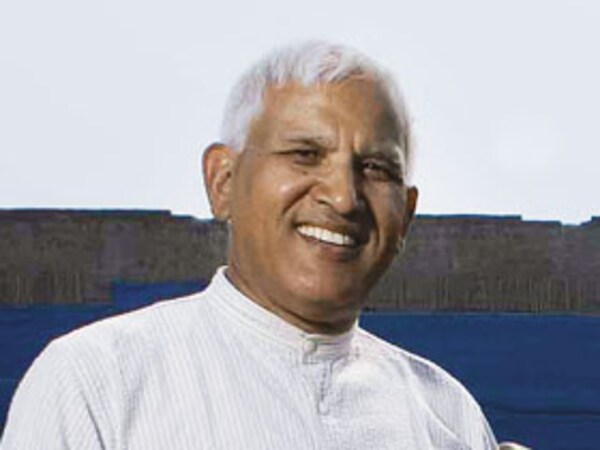
Mehmood Khan quit his high-flying global career to focus fully on transforming his poor village in Haryana
Last Updated: Dec 18, 2009, 00:01 IST6 min
Nai Nangla village is a tiny speck on Haryana’s map. As far as the state’s administration goes, the speck probably doesn’t even exist. For several decades this little village in Mewat district languished in misery. Apparently, since Independence, no administrator bothered to visit the village. Until recently, there were no roads leading up to the village. The poor remained poor, access to healthcare was limited, there was no clean drinking water, illiteracy was rife, and women were downtrodden.
But something changed last year. The village, as a collective whole, clocked a Rs. 40-lakh increase in income (Rs. 80 lakh to Rs. 1.2 crore) from agriculture and allied services in one year. For the 200 village households, 80 percent of whom depend on agriculture, this is a lot. The extra cash allowed the villagers some degree of freedom. The little school in Nai Nangla saw enrolments increase from 250 to 320 children. From 23 percent literacy in 2003, today the village enjoys 95 percent literacy.
Nai Nangla owes it all to one man — Mehmood Khan, the former global leader of innovation process development at Unilever. Khan is an unlikely son of Nai Nangla. Unlike his peers who remained trapped in the village, he “escaped” — as he puts it — and led a life that people in Nai Nangla can’t even dream about. Khan got a good education, including an MBA from IIM-Ahmedabad, and worked for Unilever across the world. He launched Unilever’s brands in Cambodia, Mongolia, Vietnam and Laos before becoming the innovation head at the company’s London headquarters.
Each time Khan came to India to visit his family, he could feel the difference between him and his brethren. He decided to do something about it. Charity wasn’t the answer — at least not a sustainable one. “Look at the Lee Kuan Yew model of development. The only resource he had was people,” says Khan. And so he set upon the task of improving the lives of these villagers through education, skill development and better access to the basic amenities in life.
The income rise is due to a Mother Dairy milk collection booth that Khan has been instrumental in bringing to the village. It was the first time that the villagers got a chance to break away from the stranglehold of local milk vendors who gave them absurdly low prices. The villagers were forced to accept it because they had no other avenue and also because they had taken loans from these milk vendors and were, in a sense, ‘bonded’ to them.
Other changes are visible in the village. A ‘common facilitation centre’ came up here with a computer training facility and a sewing centre around a year back. Basic literacy classes for women were held. A lot of the village women took up sewing as a vocation and earn between Rs. 1,000 to Rs. 2,000 a month. If things work out as planned, they will soon be sewing garments for a Gurgaon-based manufacturing unit. Some of the men, after having been trained in computers and basic English, have been hired by insurance company Aviva, Max New York Life and ICICI Bank.
Geoffrey Probert, Executive Vice President, Deodorants Category (Unilever), sees parallels between what Khan did at Unilever and what he is doing now. Probert was the business director for Unilever International and Khan’s boss when he launched Unilever in Cambodia and Mongolia. Probert says, “Mehmood knows how to create a market where none exists.” Khan launched Unilever brands in Cambodia in 1993 which was a time of political unrest and great uncertainty. Khan remembers landing at Phnom Penh airport and filling his immigration form in candlelight. Probert says, “There was no rulebook at that time. You had to just use your wits and Mehmood was an incredibly good resource for us in these markets.”
It is these skills — ingenuity, the ability to think and act on the fly and create opportunity where none exists — that Khan brings to Mewat after spending 40-plus years in the corporate world. He views Nai Nangla’s problems like a puzzle, the pieces of which he looks for and fits in. That’s the beauty of Khan’s model: While looking for the pieces that fit, he looks beyond the ordinary.
Nai Nangla had many problems. A firm believer in the power of collaboration, Khan roped in his networks and contacts from all over the world into his venture. So if it was about computer training, Khan roped in his IIM-A alumnus N.V. ‘Tiger’ Tyagarajan, COO, Genpact, who gave Khan’s computer training facility a few used computers. For literacy, Khan talked NGO Pratham into setting up operations in Mewat, a district it had never worked in before. He convinced Mother Dairy to set up a milk collection centre in Nai Nangla. “One of my early memories of Mehmood is going to sell him services and walking out after writing him a big cheque for his charity work. He is very good at making business people act with conscience,” says Trevor Davis, Global Subject Matter Expert in the Consumer Products Industry, IBM.
For many years, Khan managed to squeeze out time to do his work for Mewat even while handling his full-time job at Unilever. But in 2009, at 54 years, he took an early retirement from Unilever. “This work has been slowly beckoning me and I feel that I can add more value to rural India,” says Khan. “Once you are in that state of mind, you want to be with the people. For me the transition has been from driving topline growth in a multinational through innovation to driving growth in an area neglected for 62 years.”
From his plush Chorleywood apartment in the UK, Khan has now set up base in Gurgaon. But most days he ends up sleeping on a bare bed in Nai Nangla.
The decision to moveback wasn’t hard though it did come out from the blue. Khan spoke to Davis before making the decision. Davis says, “I was very surprised when he said he wanted to go back. His passion for the villages was growing. It was very obvious that it was becoming a very important part of his life. It was a very short call when he said he wanted to retire. He is entering a new phase in life. A moment in time arrived, personal circumstances were right and his head and heart were in the right direction.”
Currently, Khan is getting a small room ready for himself in Beria Baas, another Mewat village. It is time, Khan feels, for Beria Baas to go through a similar transformation. He is trying to get Mother Dairy to set up a milk collection outlet here. But Mother Dairy won’t come unless it gets a minimum of 500 litres a day. Khan is setting up his own dairy to provide critical mass. He has joined hands with the biggest gaushala in Hansi to source high-quality buffalos and cows. “I am creating a complete ecosystem in this dairy. The milk will go to Mother Dairy, the dung will be used for biogas and vermicompost and the male offspring, which is always neglected, will be taken as bulls by a breeding organisation called BAIF [Bharatiya Agro Industries Foundation] which is starting a bull farm in Jind.” In fact, nearly 35 years ago Khan was a part of BAIF, an organisation he joined as a management trainee straight after his MBA. Kishor Chaukar, managing director, Tata Industries, was an executive secretary at BAIF at that time. Says Chaukar, “When I look at what Mehmood is doing in Mewat today, I see the same passion, the same orientation and the same dreams as what he brought to BAIF.”
Not everything that Khan does in Mewat takes off as expected. Finding talent to manage these projects is tough. People are just not willing to work in villages. Khan has had to resort to developing raw talent from scratch in the villages. “I have learnt in my corporate life that you create so many ideas in the funnel, and not all of them will work out. There may be ideas where we have been wrong in our assessment. But I want to work with 10 ideas — even if two make it big, I’ll be happy,” says Khan.
First Published: Dec 18, 2009, 00:01
Subscribe Now(This story appears in the Jun 12, 2015 issue of Forbes India. To visit our Archives, Click here.)