What is Prashant Jain's Secret?
Prashant Jain is the biggest and the best fund manager in the country. For the ninth year running, the fund he manages is top of the charts
Last Updated: Aug 02, 2010, 07:07 IST12 min
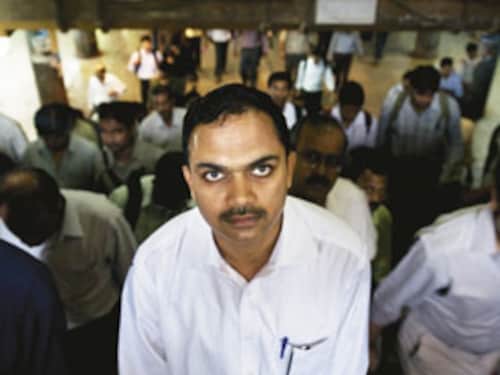
Prashant Jain reminds you of the Energizer bunny. Sure, he looks nothing like the lovable character straight out of the long-running television commercial. But his nine-year winning streak at HDFC Mutual Fund is the talk of the mutual fund industry. And why not? With a corpus of Rs. 86,600 crore, it is the 800-pound gorilla of the business. Which is why, every move its 42-year old executive director and chief investment manager makes is followed actively by investors, analysts, the media and even those in his peer group.
Two of his funds, HDFC Equity and HDFC Top 200 have delivered returns of 28 percent over the last decade and are, without doubt, the best-run funds in the India. He has followed his convictions even if it meant underperforming in the short-term — like he did in 2007. Be that as it may, he has consistently emerged tops. Little wonder then, he is often voted as the one of the best CIOs by research houses like Morning Star, Mercer and several media publications. And if all that isn’t enough, the gold standard in the business, Lipper — a mutual fund research and rating firm — reckons HDFC Equity, has for each of the last five years , been the star performer in the 10-year category.
Now, Jain is the kind of man who doesn’t dwell on these facts. But fact is the sizes of these funds are increasing geometrically to its returns. HDFC Equity fund has a total corpus of Rs. 6,734 crore the Top 200 fund is now over Rs. 8,020 crore. The latter, just moved ahead of Reliance Growth Fund, until then the biggest scheme in the country with total assets under management at Rs. 7,681 crore.

The problem as everybody sees it is this: Beyond a certain size, it becomes harder to beat the market because mutual fund managers typically bet on mid-cap stocks to boost returns. At the same time, they have to ensure that they don’t bet the house on it. Normally, when the corpus is small, there is no problem. However, as a fund grows, the asset manager faces a dilemma.
If he maintains investments in mid-caps, he ends up locking in very large sums of money there. So, assuming the market falls for whatever reason, there’s a good chance he won’t liquidate the stock on time. And if investors insist on redeeming their units, it becomes tough to rustle up the cash, resulting in a liquidity crisis.
Until now, Jain has performed an incredible balancing act. “Prashant Jain is one of the most balanced fund managers you can come across in the country,” says Hansi Mehrotra, investment consultant, Mercer. “He has delivered high returns with low risks. If you look at all the risk and return parameters, he comes off as a winner. He is truly consistent in his performance,” she continues.
According to Mercer, a firm that guides international investors on how to invest in the India markets, 95 percent of both HDFC’s Top 200 and HDFC Equity Fund can be liquidated within ten days. On average, the same number is 85 percent for other funds in similar categories. Jain achieved this by ensuring mid-caps never exceed a third of the total assets.
No mutual fund has ever faced this dilemma in India. Abroad, a handful of funds have grappled with complexities of size by opting to split funds.
Some market experts reckon this is the tipping point — and wonder whether Jain can retain his winning streak. “As the fund size grows, it will be tough to maintain returns without compromising on liquidity,” says Sanjoy Bhattacharyya, partner, Fortuna Capital.
“This is the first time we have a case like this in India,” says a leading analyst who declined to be named. “There is no question Prashant Jain is a superior fund manager. How will he perform in the future is a grey area,” he says.
Diseconomies of Scale
Jain doesn’t understand what the fuss is all about. “You guys are making a big deal about size,” he says looking us straight. “Internationally, these kinds of situations arise when the size of a fund reaches say 1 percent of the market. Why should I get worked up about size when my fund is around 0.12 percent of the market? The Indian markets are growing and as the size of my fund grows, the market will be even bigger,” he argues.
Perhaps, if one looks at past performance, Jain is right. Our research indicates the top five funds with an average asset size of around Rs. 5,500 crore have delivered 25 percent annually for the last five years. Funds with average assets under management of around Rs. 500 crore have managed to return 18 percent annually for the same period. As we go further down to the lowest five funds with average fund sizes of around Rs. 30 crore, returns are around 13 percent.
But that’s the beauty of tipping points: Things don’t always remain the same forever. Over the next two years, it will become clear whether the best fund manager in India has the chops to beat the market yet again, even with the disadvantage of a growing corpus.
There’s one thing about Jain that makes him different from other equally high-performing peers. He doesn’t take undue risk, sticks to his conviction, and is incredibly diligent about his research. No wonder the market wonders how he goes on and on and on….
The Moorings
You’ve got to believe this: Prashant Jain never planned to be a fund manager. He was just at the right place at the right time.
Most of his growing up days were spent in small towns of Uttar Pradesh, where his father worked with the state government. He completed his engineering from IIT Kanpur before moving to IIM, Bangalore. He joined SBI Caps from campus and was moved to its mutual fund department. He spent time with the fixed income team, rose to become a deputy manager and started assisting the equities portfolio manager. In 1991, when the mutual fund business was still yet to take off, he met Chandresh Nigam and E.A. Sundaram, then his colleagues, now great friends.
Once the private sector opened up in 1994, the three shifted to 20th Century Mutual Fund. A couple of years later, Zurich Financial Services (ZFS) bought the fund over and they were part of a new dispensation which became Zurich Mutual fund. This lasted until ITC Threadneedle was bought out by Zurich Mutual fund where they all continued. It was an interesting time. Indian mutual funds were still to evolve and the trio was still figuring out their investment philosophies.
They operated from the SBS Business Center in Cuffe Parade, close to Hotel President. This place was owned by Frank Simoes, a well known advertising personality who had moved his office to Goa. He built the business center like a Victorian house. And some of the best fund managers in India worked closely with each other under the same roof.

Proximity to each other gave them the confidence to challenge the dominant logic in their nascent industry. For instance, this was the time the IT industry was the flavour of the season. In 1999, Infosys was the darling of the stock market and trading at a price to earnings multiple in excess of 200. Fund managers like Bharat Shah who was handled Birla Advantage fund, then the biggest fund in the country, with assets of roughly Rs. 1,000 crore, believed the segment still had more upward momentum left in it.
But the boys at Zurich had their doubts and they sold IT stocks from their portfolio. There’s this interesting anecdote of how one of the analysts at the fund wanted the three to meet Mohandas Pai then the CFO at Infosys. After much persuasion, they relented. The analyst was hoping Pai could convince these men how wrong they were. But they stuck to their guns — that the sector would grow, but the stocks were out of whack with fundamentals.
In 2000, IT stocks tanked on the market. “It was different those days. We sold off IT before anybody could ever think of it,” says Chandresh Nigam, now the chief investment officer at Axis Mutual Fund.
All the funds they managed delivered returns in the region of 25 percent on an annual basis for five years till 2003 when HDFC Mutual Fund took over Zurich.
That was when Jain took over as head of equities and Nigam moved to ICICI prudential. Sundaram was placed as head of the portfolio management business at HDFC mutual fund. He left very recently.
On His Own
This was Jain’s breakout period. He knew he had to deliver returns. Friends from his days at IIM, Bangalore talk of his legendary cool. “I think that he is a man of conviction and not rigid in his investment philosophy,” says a former batch mate.
At HDFC Mutual Fund, Jain worked closely with Sanjoy Bhattacharyya who was then heading the investment team. Bhattacharyya, who now runs his own investment firm, Fortuna Capital says, “I have the highest regard for Prashant because of his disciplined and rational approach to investing which has led to superior risk adjusted returns. He has a great nose for buying growth at “value” prices. I think he is the closest thing to Anthony Bolton in India.” Bolton managed the Fidelity Special Situations fund for 28 years and returned 19.5 percent as against the market which delivered 13.5 percent in the same period. In 2006, his fund was split into two because it was considered too big to manage. Assets under management then were in excess of $12 billion.
It was the largest open ended fund in the UK and Fidelity was left with no choice but to split the fund into UK Special Situation fund and Global special situation fund. This is exactly the trade-off Jain may face soon.
Jain says he has no investing heroes. From time to time, he does get compared to Peter Lynch or Bill Miller though. He admits he has read up on Warren Buffet and John Bogle and that he has a lot to learn from them, but doesn’t follow anybody in particular. For all practical purposes, he prefers on-the-ground research: Meet companies and look for disparities. Once he spots them, move for the kill.
For instance, in 2007, he figured HDFC Bank was valued as much as some leading non-banking finance companies (NBFC). That seemed like an obvious disparity to him. Either the bank was undervalued or he had entirely missed something in finance companies.
His gut told him HDFC Bank, given its potential and growth rate was clearly undervalued.
Because he was part of HDFC Bank Mutual Fund, he wasn’t allowed to buy HDFC Bank stock. But it strengthened his resolve that the banking sector was a great buy. “India is a savers economy. People put their money in banks. Banks can never run out of fashion. They are the biggest credit distributors for businesses. I started buying banks because I was very sure of their growth rate,” he says. He was damned right.
There have been bumps along the way as well. Between June 2007 and Jan 2008, HDFC Top 200 underperformed the markets. Why? Because his fund managers missed the real estate and utilities boom. Jain admits he stayed away from real estate because he did not understand the business. Why, you ask him again. Because, he says, he buys only into businesses he understands well and real estate don’t figure in that. And that while he likes growth and quality, he wouldn’t overpay for growth.
Will He Continue?
The jury is out on this one. Jain reckons he has two advantages: The fund house, unlike other more aggressive rivals, does not put any pressure on delivering returns for the short-term. That allows him to maintain consistency and take long-term calls. Even when he underperformed for a few months, the fund did not ask for any explanations. Besides, the solid brand name of the fund ends up attracting good people.
In effect, that’s half the battle won. The other half is to figure out how to pass down the investment philosophy he built — and consistently followed — for more than a decade. That’s often a crucial mistake star fund managers make. Sadly, they forget — sometimes deliberately — to build institutional capabilities. Very often, organisations don’t know how to fill a void left by a star fund manager.
In 2005, when Sandeep Sabharwal, fund manager and head of equities at SBI mutual fund moved out to join Lotus Mutual fund, the fund went into a crisis. It took the top brass some time to get the fund back on track. His place was taken over by Sanjay Sinha who then managed the Rs. 35,000 crore mutual fund. He had to concentrate and build in processes and fix the equity portfolio that had been affected Sandeep Sabharwal’s exit. But later on in 2008, Sinha put in his papers to join DBS Cholamandalam mutual fund, again putting SBI in a spot of trouble.
Except this time, the pain was a lot less.
Jain says he has already taken on the job of strengthening the institution. He has a competent team of portfolio managers who have had the experience of operating in different cycles.
Jain says he prefers his portfolio managers retain views different from his. That’s how he can make diversity work for the fund. And he’s now putting in place hard coded processes that often get side-stepped in other fund houses.
That means doing the simple things well. Even though every analyst gets a balance sheet, some don’t study it thoroughly. “Many people don’t want to concentrate on cash-flows and numbers like return on equity and this is where they lose out. These are simple things but a very important part of our process,” he says.
As a leader, Jain also ensures the fund and the team sticks to quality and remains true to the mandate of the fund. He insists the team spends a long time on research, talks to analysts, studies competitors and even talk to people who do not agree with their view.
Using this process, Jain has already picked his winners over the next five years. As a big bull, he has taken positions on sectors that are directly linked with the growth of India.
Jain says he is now concentrating on banks, media and consumer goods as his picks for the future. He likes pharma stocks too, but hasn’t figured out the long-term potential of the industry.
As for investors, they’re simply hoping he’s right. Once again.
First Published: Aug 02, 2010, 07:07
Subscribe Now(This story appears in the Jul 31, 2020 issue of Forbes India. To visit our Archives, Click here.)
